Category: Europe (Page 5 of 5)

Budapest 2012

Click here for a video of our time in Budapest

25 July Budapest

We woke and got up in time for the 6:30am crossing of the Romanian Hungarian border. The train stopped twice and a team came aboard to inspect and stamp passports. The sight of a customs man going down the corridor with a ladder raised questions, and when the Hungarian policeman actually left the train still holding my passport it was a bit of a worry, but otherwise things went well enough and soon we were in Hungary. The change was actually noticeable, with a somewhat different design and decoration of houses and buildings being evident.

We entered Budapest and into Kelenti Station dead on time at 8:50am. We disembarked and wandered through the station, trying to find an ATM and locate the Metro entrance. While walking along the platform, I saw the conductor from our carriage passing by and observed to myself that he had a “Black Wolf” backpack, just like mine. What a coincidence. Then I realised with horror that it WAS MINE. I’d left it in the carriage. I dropped my bag with Christine and took off after him, thanking him profusely for chasing me up. It contained both my laptop and my tablet; a potential disaster averted.

It took a good half hour to find some money and the Metro. Hungary isn’t on the Euro yet and still uses the Florint, with around 250 HUF to the Dollar. This meant that we got lots of 1,000 and 2,000 HUF notes, making us quite rich. That is until you have to pay 2,500 HUF for a bite to eat. The Metro trip was manageable, although the system seems very old and seems to retain many old communist inefficiencies. It doesn’t even have electronic ticketing. We bought tickets from a man at a booth, then walked over to the turnstiles, stuck the ticket in a machine and let it bite out a notch. This procedure was overseen by a small army of attendants who probably could have notched the tickets themselves a lot faster because even some of the locals were having trouble with the machines. The trains themselves rattle and shake, the screaming noise made worse by the fact that many have open windows to compensate for lack of air-conditioning. Still, they move a lot of people around a large city quickly.

We booked into the “Art’otel”, a lovely 4 star job right on the Danube River. Christine was upset when she found we didn’t have a front room, until I pulled the curtain and we looked out onto the glorious sight of Matthais Church and the Fisherman’s Bastion, built high on a prominent hill. The city of Budapest is made up of two cities, Buda and Pest (what a coincidence), each having their own distinctive flavour due to quite clear differences in their past histories. A number of bridges connect the two cities. Most tourist sites can be accessed along the river itself or by following the Andrassy Avenue up to Heroes Square.

The glorious view from our hotel room

We set off to explore the hill behind our hotel, housing many prominent landmarks, including Buda Castle. This is not a fairy-tale type castle, but a large collection of buildings and fortifications dating back to the 15th Century. Most older buildings have been sacked, burnt or destroyed by various invading armies over the years and the most significant parts today date from the mid 19th Century. It is a steep climb, so we took a funicular railway up to the castle.

The run up the hill opened up some wonderful vistas of the Danube, its bridges and across to neighbouring Pest. There was so much to look at and we were thrilled to experience such a visual feast after the subdued nature of Bucharest. One of the most beautiful things about Budapest is the profusion of large bronze statues. Every plaza or monument seems to be adorned with large scale sculptures, often depicting some figure or beast from Magyar mythology. Anyone of importance gets a statue. All have a wonderful patina of green coating them, adding to the feeling of age and mystery.

Fishermen’s Bastion

We wandered across the top of the hill, inspecting the numerous ruins of previous castles until we reached Matthais Church. The building was started in 1015, then added to in the 14th Century. During the years of Turkish occupation, the building served as a mosque. Its towering spires dominate the local skyline. The lower ridges of the hill are fortified with a structure known as the Fisherman’s Bastion, the fisherman being the traditional protectors of the city walls. As a whole, these structures blend together to create a fairy-tale environment, spectacular when lit at night, and beautiful in the early morning light. We took numerous flights of stairs down the hill, navigating so well that we virtually hit our hotel right on the mark.

After the usual afternoon rest, (we did well not to have a sleep), we went down the road for a bite to eat, choosing a restaurant that had one of the most obnoxious waiters on Earth. He threw the menu down in front of us, demanded that we have an expensive local delicacy, then sulked when we ordered something else. Christine was looking at a wine, so he snatched the menus away and bought another wine menu, leaving the option of beer a non-event. We ordered two glasses of Rose, remained firm when he insisted we have a bottle, and got into even more trouble by questioning the price structure on the menu. The food was good, though we wondered at what we’d have to finally pay after our experience on the train. Another table ordered another beer, but were abruptly refused by Mr Rude, who stalked off leaving them looking around non-plussed. We braced ourselves when paying the bill but all was correct in the end. Later, I read that in Central Europe, no restaurant or cafe is considered complete without its rude waiter. Ours was top of his class.

26 July Budapest

After breakfast, it was off to explore parts of Pest, using the Metro to navigate around. We took the Yellow M3 line, a funny little railcar that ran just below the surface. It was obviously very old but really cute, especially the stations, with each one decked out in a pattern of ceramic tiles that looked decidedly Hungarian. Later, when we were sitting at a cafe above this line, we felt the chairs and table shake as a train came through underneath us.

Heroes Square

We alighted at the Heroes Square, a beautiful large square filled with the usual monuments and bronze statues. They really know how to do big spectacular squares here. Beyond the square, is a large parkland, containing Vajdahunyad Castle, a relatively modern fairy-tale type structure built in 1896 to commemorate the 1000 year anniversary of Hungary. The castle and the park was a delight, with many great family orientated activities, the zoo, a terrific Luna Park type attraction and a famous Hot Spa. It looked like a happening place and the place to be on a Summer weekend.

Vajdahunyad Castle

Back on the Metro and we worked our way through to the Market area of Pest. Here the streets were geared for tourists, with lots of cheap eats, bars and small shops. However, this is the area that lures the unwary, with scammers and pick-pockets common. Our target was the market itself, a glorious old building with the most amazing glass and tile roof. The ground floor is mostly a fresh market, while on the upper level, stalls with beautiful embroidered cloths share space with lots of tiny food outlets. Being lunchtime, the food areas were packed, and we struggled to find room, finally ordering a stuffed chicken haunch with Hungarian pasta each. The pasta was more of a gnocchi kind of thing than actual wheat pasta. It had quite a smokey taste, interesting but not all that great. Afterwards, downstairs, I expressed a need to cover the smokey taste with something sweet so we found a cake stall, selling everything from apple strudel through to lamingtons. I bought a thing that was very much like a “Wagon Wheel” chocolate biscuit while Christine opted for the nice little custard filled pastry roll. Unfortunately for her, the “custard” turned out to be Dijonnaise Mustard, so she was still left with an overly savoury taste.

We crossed the Danube to Buda, and caught a tram back to the hotel, or nearly. We had a book of ten public transport tickets but couldn’t find out how to validate them on the tram so we just rode for free. We also didn’t know that we had to ring the bell for a stop so we missed our hotel and had to walk back one leg.

Later, we used our ticket again to head down the river to a restaurant for dinner, but we still couldn’t work the validation machine so we rode for free. The dinner was absolutely wonderful. We both ordered a goulash, figuring that we had to try one while in Hungary. What an amazing thing. A spicy soup with perfectly done potato, loads of other vegetables, and more gnocchi type pasta. The accompanying bread was thick and heavy, wonderful when soaked in the goulash. This is a creation to follow-up on.

Hungarian Parliament

Then it was home with a bottle of local Rose to watch the Opening Ceremony of the London Olympics.

28 July Budapest to Vienna

The transfer to Keleti Station for the train to Vienna was easy, using the Metro. Surprisingly, although we left the hotel around 7:45, the Metro was nearly deserted and we were soon at Keleti to await our train.

Budapest is a city well worth returning to. It has a huge number of places to see and some amazing scenery. The cost of living is quite reasonable, cheaper than Paris but dearer than Croatia or Romania. The people themselves seem to be quite reserved compared to elsewhere and tend to be very formal in shops and service situations. One needs to be very careful too about the final cost of things, as tipping is considered normal yet some places also put on a 10-12% service charge after the advertised price. When that happens, no tip should be given.

The city is probably the best laid out for easy sightseeing of any we have visited. While it has been possible to do a quick two night stay, three or four nights would make things less of a rush and enable us to experience more. We will keep Budapest on our list.

Matthais Church lit up in the evening


Romania 2012

Click here for a video of our time in Romania 

22nd July Bucharest

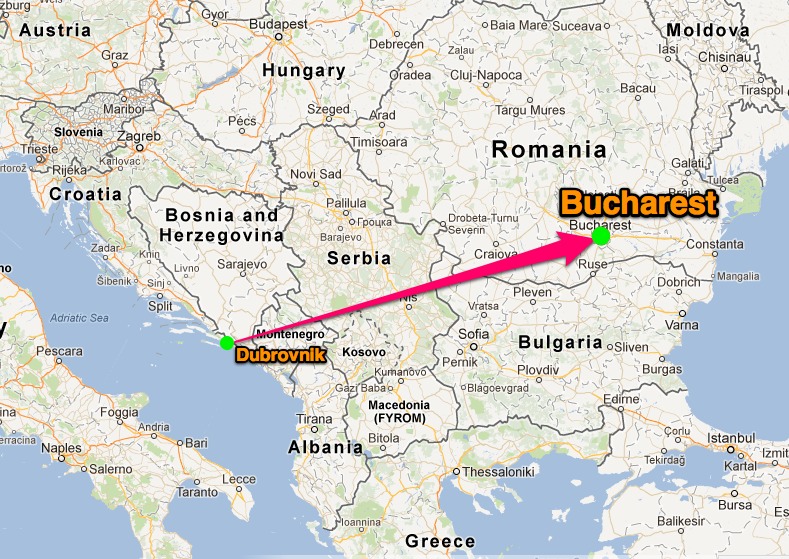
As we boarded the plane for Bucharest at Dubrovnik Airport, another Aussie guy in front was looking decidedly nervous. I think he had visions of an Airbus A320 or something but the sight of a small turbo prop job put him off. We were OK, having used this type of aircraft in the Kimberley a lot but it was certainly a taste of what was to come in Romania. They did actually serve a meal, a ham and cheese bun that was the size of a packet of cigarettes and a delicious chocolate cake the size of the matchbox. Lunch took up 2 minutes of the 2 hour flight time.


We collected our baggage and prepared ourselves mentally for the onslaught of taxi touts and hotel scammers. From reading the Internet, this place is one of the worst, rivalling Asian cities. Only one type of cab is allowed to be outside International Arrivals and these charge 3.5RON (nearly $1) per km if they use the meter and if it isn’t a dodgy meter. Several other reputable companies operate and charge 1.8RON/km but they aren’t allowed access to International Arrivals. The trick is, to turn right on exiting, avoid all taxis and head through to the Arrival area, about 200m down the building. Here you wait for someone to arrive in a 1.8RON/km cab and grab it.

This trick worked for us and we set off for the 20km trip into the city. The roads were good, wide and the traffic quite light. This meant that our driver had a lot of opportunity to really open her up. He proved that you don’t need both, or even any hands on the wheel to go through large intersections at 90km/hr, a situation made all the more worrying because we didn’t have any seatbelts. Neither did Christine have any leg room because the driver had his seat reclined to 45 degrees, probably so he could have a nap if he got tired.

It was best not to look forward and just concentrate on the scenery, which mostly consisted of broad avenues, lush parklands and an IKEA store. Christine always likes to see IKEA in each city because she feels at home. One day we’ll have to go to Sweden.

We arrived safely (by sheer luck) at the Hotel Berthelot and the doorman came scurrying out to help with bags. Christine had her 17kg pack across her shoulder, golf bag style while I had mine on a trolley. “Let me help!” exclaimed the man, and took my trolley, leaving Christine to get down a flight of stairs. Despite this, everyone was very friendly and welcoming on check-in and produced some vouchers for a free beer each at the bar (the way to our hearts). The room was excellent and all looked good.

We unpacked, went downstairs to the bar, and settled in over a beer to research a tour out to Transylvania for some castle spotting. For some strange reason, every tour was unavailable for the next two days, our only days in Romania. I checked with the doorman whether there was a reason and he just shrugged and said, “No not Mondays. It is a rule.”

“What about Tuesdays?”

“Tuesdays are OK but then maybe not!”

This proved to be the limits to our insight into the situation, except that we couldn’t find a tour that operated either day. A waiter promised to help us, and scurried away, bring back Adrian, the night time receptionist, who was keen to moonlight as a tour guide. Adrian assessed our tour needs then announced that he could take us to two castles (including Draculas) and experience some local food and wine. We assumed it would be on Tuesday, Monday being against the rules but Adrian felt that it might rain on Tuesday so Monday it was. He had ways and means of getting us into the castle. The conversation was filled with expressions such as “Let me tell you… You need to know….Listen to me….”. It was all very mysterious but we agreed to the trip for 200, a lot but potentially a great day.

From there, we headed out to check out the area and find food. The place was absolutely dead, and it was only Sunday. I’d hate to see Monday. It was so bad we eventually arrived back and ate in.

23 July Bucharest and Transylvania

Adrian was waiting as promised with his car, freshly washed in our honour. On our way out of Bucharest, he did a bit of a quick tour, pointing out the various buildings of note and the Revolution Square, where the dictator Ceausescu spoke to the masses from the balcony in a futile attempt to prevent his overthrow.

We stopped briefly outside the Palace of the Parliament for photographs. This is the World’s second largest building after the Pentagon and was the personal project of the megalomanic Ceausescu. Its twelve storeys and broad facade is impressive but it is the total area, 8 below ground levels and 1,100 rooms that give the building its impressive bulk. Although basically complete at the time of the revolution, much of the interior was unfurnished and had remained so to avoid excesses. It now houses the various legislative bodies of Romania.

The Palace of the Parliament

Along the way, Adrian filled us in on many aspects of life in Romania. He is quite widely travelled and fluent in several European languages, yet he clearly has a passionate love of Romania. We travelled North through Ploeisti, an industrial city with numerous oil refineries and related industries. Then it was into the Carpathian Mountains and an increasingly rural scene.

This is the area known as Transylvania, evoking visions of dark places and vampires. However, what we saw was very different, with numerous small hamlets dotting the mountain slopes and picture postcard scenes in abundance. Locals worked with quaint horse drawn carts and hay stacks were managed with pitchforks. We saw some wheat harvest in progress using modern equipment, but in general the fields were small and crops varied from sunflower or grapes to wheat and barley. Both sheep and dairy cattle were in good numbers. At one point, road works held us up for a few minutes and berry sellers came down the line, offering baskets of blackberries and raspberries to the waiting drivers. Adrian told us that they had been picked wild from the surrounding forests. As we climbed higher into the mountains, the forest density increased, mostly conifers but with some oak. Even higher up, the forest is almost exclusively fir and beech.

Peles Castle

The first stop was the town of Sinaia, a lower alpine town that caters for both the summer crowds who escape the heat and the winter crowd who take advantage of the abundant ski fields. The town looked terrific, full of tourists and eateries. We stopped in at Peles Castle, built at the end of the 19th Century by King Carol I of Romania, the first monarch of the unified nation. It was built in the Saxon style and heavily decorated with ornate murals and embellishments. Unfortunately, despite Adrian’s best efforts, the Monday rule held fast and we were only able to inspect the outside of the building, the inside being closed for the Monday thing. However, just the outside was worth the visit.

After a relaxing ale on the terrace overlooking the castle, we set off for the town of Brasov, higher into the mountains, to catch a cable car ride up to the top of a nearby peak. This was two car system, one up and one down, with each car taking fifty passengers. With a seven minute turn around and a long queue, we had to wait quite a while, during which time some guys tried hard to convince us to take a ride in their beaten up old Landcruiser up the mountain instead. Christine just took one look at the mountain towering nearly 2000m above us and declared the idea out of bounds.

The trip was very exciting and incredibly scenic. At times, we were skimming by the tops of the fir trees and at others, soaring over cascading waterfalls or rocky canyons. After passing each tower, the car rocked and swayed, producing many “Oohs and Ahhs” from the passengers. As we travelled higher, we passed the tree line and the vegetation gave way to alpine grasses and bare rock. Here we could see the dusty rocky track that the four wheel drives take and we were glad to be safe in the cable car.

Once on the mountain, we took a short walk to capture some better views. Another cable car continued over the peak and down to a tiny village below, no doubt servicing skiers during the winter. The air was cool, even cold when the breeze picked up. Adrian told us that he’d spent a week camping up here in one of the tiny huts when he was a child. I would have thought a half a day would do.

The highlight was the trip down, especially when the car passed over a couple of huge cliffs. It was stepping off into a void, a feeling accentuated as the car pitched forward a little as it passed under a tower. I’d love to see and experience this place in the autumn or spring, when there is a layer of snow, although the thought of the minus twenty experienced sometimes in Winter doesn’t do much for me.

Back down, we set off once again for Bran Castle, locally referred to as Dracula’s Castle. In reality, this is a bit of a long bow to draw, because Dracula was a fictional character from Bram Stoker’s novel of 1897. Stoker drew inspiration for the character from Vlad Dracula (also known as Vlad the Impaler) who was a bloodthirsty ruler of nearby Walachia from 1456 to 1462. He has been accredited with creating a forest of 1500 impaled heads of invading Saracens. Vlad possibly spent some time at Bran Castle. Bran Stoker never actually visited Transylvania, but drew on descriptions of its forests and mountains for inspiration in writing Dracula.

Regardless, the castle is absolutely wonderful. It was built in the late 14th Century by Saxons to guard access to the Bran Pass, which links Walachia and Transylvania. It also exacted a tax on all who passed, making it a profitable spot, much as it is today. A healthy crowd wandered through the castle, inspecting the collection of furniture and odd pieces of armour. Much of the castle’s interior is wood, massive oak beams and twisting winding wooden staircases. Christine managed the spiral stairs very well and even climbed up a stone tower in close to total darkness. Her hatred of steep stairs has certainly diminished during our time in Europe, probably through necessity. The castle was a seemingly endless maze of rooms and turrets, connected with tiny passageways and low doors. Even if an invading army had every managed to penetrate the walls, they probably would have gotten lost before they found the occupants. In fact, the castle remained unconquered, being a strategic military site until into the 17th Century. It really would make the most wonderful summer home, but Winter would be another matter altogether.

The courtyard of Bran Castle

Outside the castle, the vampire trade and Transylvanian folklore stuff was in full swing, with the streets of Bran awash with scary nicknacks. The crazy thing is that Bram Stoker’s Dracula was not actually published in Romanian until 1990.

By this time, Adrian was starting to get nervous about the time. He’d worked a night shift for 12 hours prior to our 8am start and had only managed a couple of hours kip in the quiet times. He grabbed another 45 minutes while we were in the castle, then it was off back to Bucharest. We both got a little nervous as the speed increased, especially on the switchback roads on the mountain faces but we just had to grin and bear it. The traffic was heavy in spots and thankfully even Adrian couldn’t see any point in passing cars in a slow moving line. However, he made up for this by talking on the phone a lot and changing gears with the other hand, leaving the steering wheel to do its own thing. I just closed my eyes and thought about the irony of actually dying in Transylvania.

He pulled over at a roadside stall that was selling a popular dish called Mici. This is a small meatball type dish made from a mix of pork and beef, then grilled over a wood fire and served with lashings of mustard sauce and bread. It was very, very good and very cheap. He promised to drive slower so we wouldn’t lose our meal, but apparently, we was joking, because the speed really ramped up as we got out of the mountains. We pulled on to a brand new motorway, only open a week, and carrying little traffic. This was the signal to make up for lost time, and at 170km/hr, Christine felt compelled to ask, “What is the speed limit?”

“About 140,” relied Adrian, “but they don’t take your licence away until you do more than 50 over the speed limit so we can go up to 190.”

“That won’t stop me screaming,” Christine pointed out. It seemed to have some effect, with Adrian dropping the speed to a comfortable 160.

We finally reached the hotel with 10 minutes to spare, exhausted but very pleased with the day (especially to have survived it). The best part of the day was the insight into Romanian life we gained along the way. We talked endlessly with Adrian, and his English was such that we could ask any question or share any observation. The scenery was incredible, the castles perfect and the cable car ride exhilarating. What more could one ask?

24 July Bucharest

The man aim of the day was to explore Bucharest itself further. With Adrian’s advice, we at least had a few aims. We had a bit of a guide book provided by the hotel, an iPhone App listing some things in Carae Victorei (Victory Avenue), one of the main drags, but otherwise, it is hard to get a good handle on what to see. This is probably because there isn’t much to see. Interesting buildings are certainly on show and there are some lovely shaded avenues and parks but the city really doesn’t hold its own against the other places we’ve been.

Signs of neglect are everywhere, yet there is more building and renovation going on than elsewhere in Europe. The electrical grid looks more like parts of Asia than Europe. Despite these signs, Romania has the highest rate of economic growth in Europe, although with the current crisis that doesn’t mean all that much. Things are steadily improving.

Along Calae Victorie

We walked a long way down Calae Victorei, passing a few casinos and numerous high end shops, such as Gucci, Louis Vitton and the likes. The casinos seem to be everywhere, ranging from big places linked to large hotels to small clubs called “Slot Clubs”, although another similar term comes to mind. Strip joins and pole dancing clubs are in abundance, along with more sex aid shops than exist in the rest of the World. Bucharest seems to be focussing more on attracting visitors who want to do something rather than see something.

The highlight is certainly the old town. Whereas other cities have an old town dating back to medieval times, Bucharest’s mostly dates back to only the 19th Century. Here things are much neater and many of the buildings have a stately air. There are strings of restaurants offering extensive al-fresco dining at low cost and covering a good range of cuisines. Much of the area is pedestrian only.

We did seek out a couple of landmarks, including the

Ziatari Church

, a beautiful old Greek Orthodox church with wonderful murals on the outside, and a couple of coffee shops and eating areas famous as meeting points for the artistic set around the turn of the 19th Century. We wanted to sample the cakes Casa Capsa, a particularly famous cake and coffee house that supplied the royalty of Europe at one stage but, being a Tuesday, it was closed. So we turned our attention to the National History Museum, which had an interesting looking line up. Of course, being a Tuesday, it was closed.

After an afternoon rest, we headed back out at night to the old city area to enjoy a great meal at a Lebanese Restaurant. We are not well-versed in Lebanese Cuisine and it has taken a visit to Romania to get us going but what we ate had us convinced to sample more. I don’t think it will get us to Lebanon itself though.

25 July Bucharest

Our train for Budapest was scheduled for 7pm so we had almost the whole day to kill, having organised a late check out. We had decided to try a museum, it being Wednesday and a day for things to open. We did a spot of research and settled on the Peasant Museum because it offered insight into the past life of rural Romania and the Carpathians. We’d follow this up with a visit to one of the new mega-mall shopping complexes that are appearing. The next trick was to actually locate these places and plan a route on the Metro. Again, this is much harder than in other cities because simple things like Metro Maps are hard to obtain.

Fortunately, the Metro is ridiculously cheap and we had bought a ten trip ticket knowing that it would never get used up because it was only the same prices as three single trips anyway. The stations and trains may lack the glamour and glitz of Singapore but they are functional and probably cleaner than those in Paris. Our research was found to be rather defective in practice and we ended up with quite a walk to reach the Peasant Museum but at least that was through lovely wooded parkland.

We paid our 3 Ron each, having been automatically granted a Senior’s discount, and entered the first display area. At that point, the smart move would have been to turn around and leave again but we pressed on through a display standard that wouldn’t pass muster at a school fete. Samples of peasant clothing and small household artefacts were scattered at random with only the odd sign in English by way of explanation. The place was airless and musty. We were so bored! This is despite the fact that the guide books say that the Peasant Museum is the pick of Romanian Museums. The place was heavily staffed, each hall or display having one or two attendants. These poor people had to sit on chairs and read, write or text each other all day long.

Filled with a knowledge of peasant life, we navigated the Metro once more and again got a bit lost trying to find the new Mega Mall. Once located, it was just like any other giant complex, with all the usual shops, including a Marks and Spencer, Clarks Shoes and store names familiar around the World. One unique feature was an ice-skating rink sitting in the middle of the complex, surrounded by fast food spots.

We tried a Pizza outlet for lunch, ordering a Marguerita Pizza and a drink each. The pizza took a while to arrive and when it did, we queried the seeming lack of tomato. It appeared to be just cheese and nothing else. The girl said that the tomato sauce would be inside the mozzarella, and lifted the cheese with a knife. Finding nothing, she took it away and promised a new pizza. How could you forget the tomato? We ordered more drinks, but had to repeat the order when none came. When we paid, they short changed us 5 RON, a very common thing in Romania. It seems that people will automatically take a tip, and getting all your change requires a long drawn out argument. We were certainly ready to get on our train.

At the train station, I started to take a few photos, but immediately got into trouble. Apparently, it is not allowed. I’d previously got into trouble for using the iPhone to take a photo of a sign in the Metro so we could remember the name of the station.

The train to Budapest was ready on time and we boarded to find our compartment. We had booked a 1st Class Sleeper with en-suite, a really nice self contained unit, very clean and modern. It had a nice shower with beautiful hot water. What was missing was towels, soap and toilet paper, all of which had to be requested.

The scenery was the same beautiful vistas of Transylvania that we’d enjoyed days before but it took on a slightly different point from the train. At times I was reminded of a model train set, with the fir trees, little stone stations, alpine houses and piles of neatly stacked lumber. As long as we didn’t just travel around a continuous circuit we were right.

The dining car was well appointed and we decided to try dinner. The man gave us a menu and advised that the grill was the way to go. Now we’d previously read about the dining car on this train on the excellent web site www.exploreforayear.com. It was a hilarious experience and one that our experiences with Romania could relate to. Forewarned, we soldiered on.

“So you get pork cutlets, chips and salad for only 13RON,” queried Christine, knowing it to be untrue.

“Yes,” replied our man.

“And you don’t have to pay extra for the salads?”

“No. All here,” he said.

“OK,” we agreed and ordered two serves. A Slovak family watched on in amusement and said that they would see how we fared.

The meal itself was excellent, with beautiful pork cutlets, lashings of delicious salad and chips covered in grilled cheese. It was a huge meal and we could easily have shared one. With a couple of beers thrown in, we figured the bill to be 42RON (about $10) and we had 70RON left.

Along came our man with his calculator, entered a string of figures from his head and wanted 82RON. Christine asked for the menu and showed him the prices.

“Ah no!” was his response, “It is extra for the chips and the salad.” The Slovak family were cracking up.

“This is how it is done,” said our man. We handed over our 70RON, happy to be left without any Romanian money, and topped him up with 3 Euros, another win for the man. It is so bad you have to laugh. The Romanians wonder why they have an underserved bad reputation in Europe.

Meanwhile, the Slovak family ordered two meals for three people and at least knew fully what they were up for.

The night trip was good and we both got plenty of sleep.

Croatia 2012


A YouTube video of our time in Croatia can be seen here.

16th July Ancona to Split

Today we left Italy to cross the Adriatic Sea by ferry to Split, in Croatia. A taxi proved to be the best way of getting to the ferry terminal, although that in itself is a two stage affair. The check-in and collection of a boarding took place in one building, then it was onto a shuttle bus to travel around the port to immigration and departure. Every part seemed to have a long wait and standing around in queues became quite tedious. We found ourselves alongside another Perth couple, Paul and Laura, both teachers taking time off on a deferred salary scheme. They were travelling in a motorhome and had it booked on to the ferry. Unfortunately, they found that the papers they had for the hired van were actually photocopies and that the Croatian authorities demand originals. It could be that they would be sent back. Philosophically, they pushed on.

The ferry was a large twin hulled hydrofoil which did the crossing in five hours, less than half the time of the numerous other companies operating, all of which travelled at night. We took up residence in the spacious and comfortable rear lounge area, sharing a seat with Paul and Laura. For us, the voyage consisted of a bit of beer drinking, a little bit of eating, much sharing of travel yarns and the occasional stroll around the decks. For many other passenger, the voyage consisted of throwing up their last meal, lying around on lounges or the deck groaning, or just sitting around looking like death. The wind was blowing quite hard and a heavy broadside chop added to the regular low swell to produce a bit of a roll, unusual on such a large twin hull. Walking around was a lot of fun, with straight line paths being quite impossible.


Coming into Split

The scenery consisted mostly of water, not surprising as we mostly just sailed straight across the Adriatic, although we did pass several picturesque islands along the Croatian coast. Docking into Split was efficient and we once again joined the inevitable queue to pass through immigration into Croatia. Nearby, we could see Paul and Laura lined up in their camper, awaiting their fate. We’d enjoyed their company on the way over and had our fingers crossed that all would go well for them and they wouldn’t have to face an immediate crossing back to Italy.

Once processed, we were met by Mirko, the owner of the apartment we had booked. Mirko is a very friendly and helpful guy, showing us the way to our lodgings and pointing out the locals spots along the way. He spent a good half hour with us giving us tips on things to do in and around Split. This advice, and the sights we’d seen on our short walk from the pier, convinced us to extend our stay from two nights to four, and Mirko said he was sure he could find us some accommodation.

Our first impressions were very positive; the whole place was alive. There were lots of tourists but things did not seem out of hand. We could step out of the door and straight across the road to the markets, filled with incredible fruit, vegetables and fresh foods. The markets were on the edge of Diocletian’s Palace, an amazing Roman palace dating back to the 5th Century AD. While much has fallen, a lot is now incorporated into other buildings and enough of the original exists that one can sense what it was once like. The lower levels are filled with shops of all kinds while the upper levels are mostly small hotels and apartments. Signs of general decay, damage by waves of successive invasions over the Centuries and local destruction and rebuilding is much in evidence but somehow it is very refreshing to find that all this is actually being preserved through usage. The result is one big living, working time capsule.

Many ferris and cruise ships make Split Harbour a busy place

17th July Split

We had a lazy day, needing to unwind a bit after the rigours of Verona and Venice. All we really did was use the local supermarket, go across the road to the markets to buy some fresh vegetables and stock up on dried fruit. The dried fruit here is wonderful and cheap, masses of figs (even Christine is a convert), apricots, prunes and lots of nuts.

We did have trouble buying milk though. I chose a bottle that definitely suggested it was low fat. All was fine until we poured it into our coffee for the first time and it curdled badly. Christine had used some instant coffee left by a previous tenant so we blamed that, but the same happened with our instant coffee. Then she tried the milk and nearly gagged. It was some disgusting Yoghurt type stuff, very thin and pourable but with a taste that was unlike any yoghurt I’ve ever had. I’d bought some yoghurt for my cereal so we checked that. Same result! Inedible! After pouring a litre and a half of yoghurt and cat’s piss down the sink, Christine headed back to the supermarket to try once again for milk. She got it next time but now we are very cautious when buying dairy.

Another small outing was to purchase a bus ticket to Dubrovnik, our next destination and to check out the local travel agency. The bus ticket proved easy, but the travel agency was more difficult. Someone in Split needs to take a coordinating role because it is actually a bit hard sometimes to find the right kind of experience or tour. If there is one central agency, we didn’t find it. Most places purporting to be a “Tourist Bureau” were actually small time booking agencies for one or two tours. Resorting to the Internet, we chose a good looking tour to the outlying islands and then set off to find the agent and buy a ticket. The address was in Diocletian’s Palace, not far at all, but somewhere in the labyrinth of tiny streets. We entered it into Google Maps but it was hopeless. The streets were so narrow that a GPS fix was impossible and the guidance system just ran us around in circles. Eventually, we came across an agent with the kind of trip we wanted, bought it, then exited to find the agent we’d been seeking was directly opposite.


Diocletian’s Palace


Shops in the basements of Diocletian’s Palace

We ate both lunch and dinner in our apartment, saving both money and energy. It was a lovely relaxing day, although we did worry that Mirko would come back and we’d have to confess that we’d seen little of all the sights he had directed us to. It was a lovely relaxing day. Just watching the comings and goings in our neighbourhood was fun. We live on the ground floor of a three storey block. Mirko owns four or five of the apartments, others are rented by someone else and there seems to be a few permanents that live in a B&B. Young backpackers come and go (always entertaining) and a small army of cleaners service the variety of rooms around us. We have access to a small courtyard, where we spend time in the cooler hours. It is also the clothes line area so they is a constant stream of activity and I must say the typical image of a “washerwoman” is somewhat challenged here with all the youthful slim bodies around. There are also three resident cats, that just sit and ignore all unless there is any offer of food or unless the “cat lady” in the middle apartment appears. Mirko appears every now and then showing prospective tenants around. It is all so entertaining.

July 18th Split

After breakfast, we packed up our beach gear and headed down to the local quay to catch our boat for a day on the water. We boarded the “Pisanica”, a small wooden vessel that would take us first to Maslinica on the Western end of the island of Solta then on to a deep inlet on the Eastern end they were advertising as the “Blue Lagoon”.


The Pisanica

It was an interesting experience, with the crew displaying little knowledge of how to cast off and get underway, although the skipper seemed to know what he was doing. Once away, they all started into steady beer drinking, although pouring a beer in the rolling swell was somewhat difficult.

The coastal scenery was magnificent, with the majestic mountains behind Split taking form as we drew further from shore. They must be truly amazing in Winter, with the snow covered peaks in the sun. Small towns dotted the various islands and mainland spurs, while the sea had a scattering of yachts getting underway to various destinations. Sitting watching the other passengers is always fun. We had to laugh at one woman who was resplendent in her hot pink ultra high wedge-heeled shoes, who was generally dressed well below her years. She would have lots of fun on the beach in those. Some others who were looking rather green found a spot to lie down and wish for the day to end. One strange looking chap, face half hidden by unruly and unwashed hair, had wandered on board late and seemed to negotiate with the ticket seller. His trousers were held up with a piece of old string and his clothes were last washed in the Twentieth Century. He sat forlorn and miserable for much of the trip out. We figured he was returning to an island or something.


Maslinica

Maslinica proved to be an absolutely delightful little seaside village, somewhat touristy, but still quaint and pretty. It is set in a deep inlet, completely surrounded by small quays. We docked at a modern quay, complete with attendants to help. Numerous motor and sailing yachts were tied up along the quay, with many more dotting the various nearby coves and bays. The foreshore was lined with eating establishments and cafes, while a few rocky beaches were filled with bathers and sunseekers. It was bloody good!

We walked around, stopped for ultra cheap and very cold beer, ate our first icecream of the whole trip, swam in the wonderfully clear water and spent ages watching expensive yachts come in to dock in the ever decreasing space. As the time wore on, the breeze picked up and by the time we returned to the “Pisanica” for lunch, it was rocking at the dock. Lunch was barbecued chicken or sardines, selected upon booking. We’d chosen one each, fortunate because both were good. We were served a basket of bread and a bottle of white wine to accompany it and there was no shortage because some passengers had elected to forgo lunch, fearful they would lose it in the worsening weather conditions. The rocking of the boat on the quay forced some onto the pier to eat lunch while some just stayed away altogether. The old bloke in the ragged clothing was in seventh heaven and wolfed down all his tucker and a whole bottle of wine.

The skipper came along the tables to explain that the strengthening wind meant proceeding to the “Blue Lagoon” was a poor option and offered the chance to stay the afternoon in Maslinica. We didn’t care either way and the majority elected to remain. One group were upset and tried to argue it out but got no support. It was back to the quay for boat watching or another swim. We wandered off, stopping to admire the way “wedge-heels” had managed to organise herself on the beach to sunbath in her bikini yet retain her shoes. Apparently, those shoes don’t come off for anything.

Getting off the wharf to head for Split was quite an affair. Once again, the crew proved completely incompetent (or pissed) and the boat was objecting to being thrown against the stone pier so finally, in desperation, the skipper called for the line to be cut. The crewman pulled out a puny steak-knife, that must have been razor sharp because it cut through the heavy mooring line like cheese and we were away. As we putted away into the heavy chop, we could see a small boy rushing forward to try to claim his prize of a small length of rope.

The trip home was even more beautiful than the trip out, with a rising mountain backdrop. The boat ran well in a heavy following sea and even our uncomfortable sailors survived. The old guy actually looked happy (perhaps it was all the wine). What a great day. Just to cap it all off, the crew continued to drink beer steadily, although the skipper had an hour’s sleep, and the docking performance was so bad that they got into a very loud Croatian slanging match with the boat in front. That made it an even better day.

19Th July Split

The plan for the day was to see more of Split than just the tiny section of the Old Town and Diocletian’s Palace that we had wandered through. We thought we’d catch a “Hop On Hop Off Bus” to tour the modern parts of the city. Split is Croatia’s second city and is quite extensive. Unfortunately, this didn’t work out well because there was an enormous cruise ship in the harbour and the bus was booked out.


Wandering around the old town

Instead, we elected to just walk and see, a great decision in the end. Once outside of the palace walls, the city opens out into broader streets and more open squares and we found walking around quite easy. We wandered across to the Northern side of the peninsular and discovered some lovely coves filled with yacht clubs, sporting facilities and a huge arena. After an iced coffee and time watching the passing parade, we made our way back up and over the hill to enter the old town and its labyrinth of alleys. By luck of good management, we found our way back to the Birkenstock shop that Christine had found two days before to buy yet another pair of shoes. “This is the only place I’ve found the style I want,” is her excuse, but I let it slide because the shoes are much cheaper than those in Perth and even cheaper than on-line.

After lunch back at the apartment, we set out for the local beach, a crowded spot but nice enough for a bit of a swim. The water is shallow but at least the bottom is sand and not the usual rock that one finds in this part of the World. After a swim, we wandered around the point to explore but all the other beaches we encountered were rocky with pebble beaches. I don’t understand how people can go to sleep on a beach towel covering a rock beach. Then it was back to sleep in the comfort of air-conditioning and a proper mattress.

We returned to the restaurant we’d found on our first night for a wonderful meal of seafood risotto, followed by a stroll along the front promenade. There was all kinds of entertainment on offer and we stopped to be enthralled with a wonderful display of ethnic dancing. It was very energetic and very entertaining. After a few more venues, we eventually turned in, Split being one of the few places that has regularly kept us up until quite late.

20th July Bus to Dubrovnik

After a leisurely pack-up, we walked down to the bus station for our trip to Dubrovnik, approximately 200km to the South. The bus seemed comfortable enough although we were assigned the front seats, probably because we had booked a few days beforehand. Just as well too because the bus filled up. The front seat affords a wonderful view but I’ve found that I sometimes prefer not to watch when in heavy mountainous terrain.

I was puzzled at first because we headed North and kept following signs to Zagreb and Rijeka but eventually we had climbed well into the mountains and took a sweeping bend onto a huge motorway headed South. The views back over Split during the mountain climb were truly impressive from the first ridge at around 600m.

Mountains were to dominate the scenery during the drive and just as in Spain, the road passes through numerous tunnels and across some enormous bridge spans. While we were on dual carriageway things were fine and we could sit back and soak in the wonderful views. Later, nearly half way to Dubrovnik, the motorway finished abruptly and we turned off onto a narrow road with barely room for two vehicles and quite terrifying when they were both trucks or buses. The road headed down at a 10% incline and there were times when we clutched hands or simply closed eyes. To Christine’s right, a sheer drop away fell two to three hundred metres to a large river and flat plain, filled with agricultural crops. It seemed miles below and there was very little between the bus wheels and the edge. Fortunately, the bus driver was quite careful and made regular use of the air brakes.

Eventually, we reached the bottom and drove through the tiny village of Drusina, creeping around parked cars and negotiating tight corners. Then it was back into the mountains again and although the road widened, it remained single carriageway and had very little in the way of a verge or pullover area. The scenery actually got more spectacular, with a huge inland freshwater lake area and a large river.

Finally, we emerged from a winding road to a checkpoint into Bosnia and had to stop while an official wandered through the bus to check on passports. Bosnia has a 24km stretch of coastline that separates Dubrovnik from the rest of Croatia so all buses from Split have to pass through this strip. While our inspection seemed quite lax, we did watch a young couple in a camper van who were frisked then had to stand outside while their van was gone through.

They use the small town of Neum as a rest stop and we were able to buy a hamburger. Unfortunately for most passengers who were carrying Croatian Kuna, the one restaurant wanted Euros or Bosnian Marka but fortunately for us we had some Euros. We scored a delicious hamburger for only 2.5. After a twenty minute stop, it was off again, through more mountain passes and seaside cliff drives. We ate our hamburgers slowly because we had to wait each time for the stomach to settle in order to swallow. Instinct said “Don’t look!” but the scenery was so beautiful we had to look. We passed through the border again to re-enter Croatia, this time they just waved us through.

Finally, we entered Dubrovnik, a two hundred kilometre trip in four hours. This is without doubt the most spectacular drive I have ever encountered anywhere.

A taxi from the bus station dropped us at our apartment and the owner, Anna, was there to greet us and show us around. Just as with Mirko in Split, Anna was a terrific host and gave us tips to exploring the city. She showed us to our room and we were thrilled, particularly by the wonderful terraced area that overlooked the walls of the old city on one side and the old harbour on the other. We were perfectly happy just to settle in to the view and do nothing, but with only two nights in Dubrovnik, we got our act into gear and headed out to do some tourist stuff.


Our wonderful terrace overlooking the harbour

We figured we had time to target four main things in Dubrovnik;

  1. Walk the city walls and old town – these 14th Century fortifications are just on 2km long and are in excellent condition;
  2. Visit the tiny island of Lokrum, sitting in the middle of Dubrovnik Harbour;
  3. Ride the cable car to the top of the mountain above Dubrovnik;
  4. Visit D’Vino wine bar – a cult location to learn about Croatian wines and cheeses.

The walk of the walls was first up, and not far away. We could almost touch the Eastern walls from our terrace so we entered the old town through the nearest gate and followed a huge flight of steps down to the main thoroughfare. As in all old medieval towns, the visual sights are stunning, with gorgeous little nooks and corners making it a photographers dream. The town was reasonably crowded, with a cruise ship in port but things weren’t out of hand.


The fortified walls of the old city

Dubrovnik was badly damaged during the Siege of Dubrovnik in 1991, with the Serbian forces shelling the old city from the heights during the three month attack. Signs of the damage are still present, mostly in the form of reconstructions or new buildings to replace the lost ones.

We paid our 70 Kuna and climbed the steep steps to the top of the walls and commenced the circumnavigation of the city. From this vantage point, the old city is really beautiful, the layout of the streets being clearly visible and the various spires and domes protruding above the sea of terracotta roofs. It was hot up top, and we were soon sweating freely as we followed the walls around. The scene changed constantly, from inland mountains, to the rocky points on the seaward side followed by the busy movements in the tiny semi-circular harbour. It was hard going in the heat but well worth the effort.


View from the walls

The view from the walls had convinced us to drop the cable car from the list. I’m sure the views are good but we’d already taken in the essential Dubrovnik. We picked up a supermarket on the way home for supplies, having the intention of eating in, and found that the cost of lovely commanding views over the harbour is that we have to trudge uphill on the return home.

Dinner on the terrace was a sheer delight, particularly with the lights playing on the walls of the old city and the mirror calm harbour reflecting the anchored boats. A beautiful spot.

21St July Dubrovnik

We set out quite early to go to the island of Lokrum, a short ferry ride away and sitting in the middle of Dubrovnik Harbour. The island has a long history, having been the site where Richard the Lionheart got himself shipwrecked, and also once owned by Emperor Maximillian of Mexico. It contains the ruins of a few buildings, an old fort built by the French and a partly intact Benedictine monastery.


Dubrovnik Harbour with the island of Lokrum in the background

As tiny islands go, it is quite cute, being beautifully wooded with cypress, pine and oak. Walk paths are well developed and it doesn’t take long to get anywhere much. The highlight though, is the short boat ride over, producing some fantastic views of Dubrovnik and its mountain backdrop. The harbour is a hive of activity, with small boats, sea kayaks and glass bottomed boats scurrying around. Near the island jetty, the scenery was dominated by the huge “Concordia Favolosa”, sister ship to the ill-fated “Costa Concordia”.

Once of the island, we quickly took in the sights then checked out a small salt lake on the island, locally called the “Dead Sea”, that proved to look much better in the guide brochures than in real life. Next, we headed down to one of the many rocky beaches. Some are “clothes optional” but we managed to avoid those, although in practice most beaches in Europe seem to be rather liberal. What is hard to find is a sandy beach. These weren’t even the commonly found pebble beaches, but rather low rocks and small cliffs. Steel ladders embedded in the rock dotted the coastline, which made for easy access, but made it hard to find a spot to lie down and sunbathe. The usual hire lounges were around but aren’t much good if you only like to lie out for 15 minutes or so then move on.


Beautiful scenery on Lokrum

Still, the sea was a pleasant 26 degrees and the water incredibly clear. There were a few fish around, mostly bream type things and, as always, lots of small sardines and hardyheads. There wasn’t much in the way of life on the rocks, with no corals, sponges or suchlike visible but we spent a while exploring below the surface before just swimming.

Later, we had to drop in to the snack bar and have the usual refreshing lager and watch the passing parade as the ferries came and went. We’d taken a packed lunch so the fact that there was only one expensive restaurant on the island wasn’t a worry.

Back on the mainland, we headed for home to have a relaxing afternoon doing nothing.

In the evening, we wandered off into the old city again to track down the D’Vino Wine Bar, a spot with a big cult following. It was a cute little spot and we ordered the three wine tasting each, Christine with the reds and me with the whites. The wines were served and explained to us, all coming from different regions of Croatia and Slovenia. We haven’t heard much about Dalmatian wines in Australia because there are virtually no exports and certainly not down our way. The wines were all of an excellent quality and had more substance to them than many of the French wines we’d had. It’s a pity we hadn’t had access to this on first landing in Split because buying wine has been a bit of a puzzle to us, not understanding any of the terms. The wine industry has a system of government quality and area control, similar to France, and we have found them to be universally good, although these were better again. We rounded our wines off with a preserved meat and cheese platter.


Wine tasting and meat/cheese platter at D’Vino Wine bar

22 July Dubrovnik to Bucharest

The airport shuttle bus left from a spot about 100m up the road from our apartment, making the accommodation almost the perfect location. With the airport some 20km out, a taxi can be quite expensive so we joined the backpacker set and took the shuttle at 35 Kuna (about $6) each. THis proved to be the best tour money we’d spent in Dubrovnik. Even if you aren’t catching a flight. It is worth taking the airport shuttle for the drive. The road follows the seaside cliff for 90% of the journey and affords some spectacular views of the numerous offshore islands and the area sign-posted as the Dubrovnik Riviera. We even saw some inviting sand beaches. The experience just strengthened our resolve to return to this magnificent part of the World. We leave for Romania well pleased with our time in Croatia. It is definitely a place to return to and explore more and the thought of chartering a yacht to sail the Dalmatian Islands is very appealing. It is hard to compare Dubrovnik with Split because they are so different in history and nature, but on the whole we preferred the laid back atmosphere and low cost of living in Split. Dubrovnik is almost too perfect and neat, and the prices are more akin to Venice and Paris than elsewhere. Still, it can’t be missed.

Italy 2012

11th July Madrid to Verona

A YouTube Video of our time in Italy can be seen here

We flew with Ryan Air to Verona, a trip of under two hours yet it seemed to take up much of the day. This is why we like train travel, because so much time with air travel is taken up going through security checks and sitting in waiting rooms. It was with great trepidation that we booked on Ryan Air. They have a terrible reputation amongst travellers because their rules are applied so rigidly that it often seems totally unfair. We spend an hilarious half hour reading the complaints page at http://www.airlinequality.com/Forum/ryan.htm. Although we laughed a lot, we also were terrified by the time boarding time came in case we were excluded from the flight or were charged an extra 60 Euros for no apparent reason. In the end, we had a fine experience, perhaps because we had paid extra to book the exit row seats. An ordinary ticket doesn’t get you a booked seat and there is a bit of a mad scramble at boarding time to secure a seat with your partner.

At Verona, we caught a cab to our hotel, nice little place called the Piccolo, which is handy to the centre and all the main sights. I think most hotels would fit the bill because the city is very compact, mostly still contained within the original Roman and medieval walls. Walking is an easy option here, although the heat in July means choosing a shady path where possible. Bikes are commonly available, including a ride and drop system, but the pedestrian density around the popular tourist zones can even make cycling difficult.

Verona is an extremely beautiful city. It is very much geared towards the tourist, but let’s face it, if you’ve got such attractions as Romeo and Juliette’s houses, a 2000 year old amphitheatre that is still in use today and a system of medieval fortifications that are still very much intact, people are going to come in droves to stay. They have the usual open buses and little tourist trains wandering around the cobbled streets but we chose to just use a map and the iPhone to research the various places we visited.

If one had the chance to visit only one place in the World for 30 minutes, the Piazza Bra would have to be on the list to consider. This wonderful huge plaza is surrounded by lovely buildings and numerous eateries, making it a great place to simply “hang out”. The plaza is dominated by the Arena di Verona, a huge Roman amphitheatre that was built in 30AD. It is still in use today and can seat up to 22,000 people, hosting opera, rock concerts and all manner of entertainments. A small section of the original outer wall remains, another tier higher yet again than the top seating tiers but the rest of the outer ring collapsed in an earthquake in 1117AD.

The Arena Verona in the Piazza Bra

We wandered through the Piazza Bra and on down through the main shopping areas, stopping for a wonderful pizza lunch. The search was on for a new SIM card. My Spanish one had run out but strangely, Christine’s was still working, even with data (they said it couldn’t happen). After much searching, we found a TIM 12 card which cost 20 but gives unlimited Internet in the first month and will work in other European countries.

Exhausted, we wandered home, stopping at a fruit stall because of the wonderful cherries on offer and then into a small supermarket for some olives and cheese. We are trying to adopt the strategy of one decent meal a day and tapas type snacks for the other.

12th July Verona

Our first stop today was the train station, to check out the lie of the land and to purchase a ticket for the trip to Venice. We opted for the regular train that stops a lot because it was so much cheaper than the express and managed to negotiate the ticket machine in only three attempts.

Then it was off into the city centre to buy some tickets to the opera, a must do when in Verona. Along the way, we passed a hawker selling sunglass and watches. We gave the usual “no thanks” before sighting a pair of binoculars, a perfect size for the opera. After much good hearted bargaining and joking, we agreed on 20 (we were robbed) and then found our smallest change was a 50 Euro. He didn’t want to lose a sale, so he left me in charge of his stall and took off with Christine to find change. They were gone for ages and I sold four watches and three pairs of Raybans for him. Eventually he returned with much laughter and I left him to it.

The opera tickets were only 25 each, cheap seats but then how much should you pay when you are right up the top and sitting on old marble steps. We are going to watch Don Giovanni by Mozart, which is at least has the odd decent tune to it (you can see I love opera), but the atmosphere should should be fantastic. This is part of the current opera festival, with six operas running over the summer months. Last night was Aida, and a large section of the Piazza Bra is covered with huge Egyptian sphinxes and Pyramids that make up the massive set.

Another target was Juliette’s house, well preserved 13th Century house and quite fascinating. The entrance way was absolutely covered in graffiti, as thousands of lovers have left their marks on these famous walls. They even proved five or six telephones on the entrance, each bearing two hand pieces so visiting lovers can speak directly to each other and utter words of eternal devotion. All this is very crass but wonderful none the less. Remarkably, the only real feature on the front of the house is a stone balcony. In the courtyard below, there is a bronze statue of Juliette and popular rumour has it that good luck can be obtained by rubbing her right breast. I tried this with the woman next to me and she slapped me back for good luck.

Julliette’s famous balcony.


Some “good Luck” with julliette

After much searching, we finally tracked down Romeo’s house, only a few streets away but difficult to locate. While there were huge crowds at Julliette’s house, Romeo’s was deserted, with only a small sign on the street signifying its importance. Typical! The woman gets all the attention.

We tracked down a travel agent, although they seem to be rather scarce here. This one, the GiraMondo in Via Roma, was very big, and a very efficient and pleasant young man managed to get us some tickets on a ferry crossing the Adriatic from Ancona to Split next week. This is something we had not been able to do on the Internet because we just got too confused and unsure of what we were doing. He made it all work for us. Sometimes, it is best to go to a professional.

We strolled to the River Adige, a strange fast flowing river that would defy attempts to navigate of swim. I assume it is coming from the nearby mountains. Then it was a lunch of melon and ham, followed by the most wonderful tortellini with ricotta and spinach. Christine is getting inspired and keeps talking about getting back to her kitchen to emulate all the wonderful dishes we have encountered.

The Castlevechio

On our way home, we toured the amazing Castelvecchio, a medieval castle built around 1350. Once again, many sections are largely intact and just wandering around the grounds and across the bridge is a great experience. We managed a few hours of rest to get ready for the opera and to continue the never ending job of researching somewhere to stay on our arrival in Croatia next week.

Overlooking the Adige River from Castlevechio

A hotel shuttle bus took us into the city for the opera, with arrangements to pick us up afterwards. It serviced three hotels and there were quite a lot of people going, the long opera season drawing many people from all over Europe. Once in the Arena, we found some seats, not difficult because we were still an hour and a bit before the start. We had bought the cheap seats, up high and just had to find a spot on the marble steps. Bearing in mind that these steps are not all that new, some were a bit worn, in fact, all were worn down 5mm or so over the ages except where they joined, perhaps because people didn’t like sitting on the join. This meant a ridge, that was definitely to be avoided. Four hours later and every square centimetre of an ancient marble block was to be avoided by the buttocks. We were given the chance to rent a cushion for 3 Euros but proved how tough we were by refusing, a decision we very much regretted. In fact, we were to remember our night at the opera every time we sat down for several days.

The crowd swelling in the arena on opera night

The steps are quite broad and the idea is that one sits on the edge and uses the first half of the one below for foot room. This system fails if some uncouth person takes up the whole space and leans back against the next step or if people bring their own giant cushions to lay out and claim territory. It seems there are inconsiderate people everywhere; it reminded us of a day at the cricket.

Below us were the rich people, on their booked seats, at least they were rich before they paid for the tickets. Our seats were 25 while the good ones were 185€. We soaked in the scenery as the crowd grew and I found myself wondering at the many millions of people who had sat in this arena over the years and the type of performances they had witnessed. The one remaining part of the original outer wall towered above us and glowed in the setting sun. It was quite incredible.

Three steps below us was a row that had to be left vacant right around the arena to allow traffic flow to the exits. As the crowd grew and places became hard to find, lots of groups thought they had suddenly found an excellent spot and set up camp on the broad vacant stretch, and we watched with great amusement as they all got moved on. One guy acted like a puppy that didn’t want to walk and just sat for a while, ignoring everything until reason prevailed and he slunk off dragging his lower lip.

The wonderful set of Don Giovanni

My first thought when the opera started was “Damn! We are too far away to hear properly.” but this was not really the case. I guess we are so attuned to amplified performances, we forget that natural sound music needs to be really listened to. However, this was an audience that had come to listen and in a very short space of time, I realised that I had adjusted and the volume was fine, especially when the women were singing. All over the audience we could see the glow of tiny torches and iPads as a huge number of people followed the score from books or electronic devices. Unfortunately, there was also the occasional flash, despite the warnings that filming of any kind leads to expulsion. The audience was actually so well behaved that when someone farted (a really good one) behind us, there was nothing more than a muffled giggle, although looking around, most people were working hard not to lose it. Another highlight came when a cat emerged from one of the entrance tunnels, panicked in front of 20,000 people, and dashed out into the posh seating area. Of course, we could watch its progress as it ducked and darted from one row to another, but the people down on the flat area would not have been able to see it until it appeared at their feet. It was getting really agitated and not to be trifled with. Eventually it found itself back near an entrance tunnel and mercifully escaped.

Another break came as a few spots of rain began to fall, not heavy but definitely a worry. The orchestra took no risks with their instruments and half way through an important scene, packed up and scurried for cover. The singers stayed longer but had little choice and the audience waited twenty minutes for the show to resume. The last drop actually fell as the orchestra left but then later, as we left the arena, we found that significant rain had fallen just outside in the Piazza Bra.

The performance was excellent and the set was unbelievably grand. At one stage, I counted more than 100 people on stage, all brilliantly costumed. From out vantage point, we could observe some back stage activity and the organisation was staggering. What killed us was the length. The show started at 9:15pm and finished at 1am, which meant that we didn’t get home until 1:30am. Given that we didn’t understand a word (we at least knew the story), the show could have been 2 hours shorter and we would have loved it. If Mozart was still around, I’d email him with a few suggestions for which bits to chop out. I think we can tick “opera” off the bucket list.

13th July Verona to Venice

We had a train ticket booked, departing Verona at 10:15. Because we’d only gotten to bed at 2am, we decided to delay and catch a later train at 1pm, possible because the tickets are fully flexible. That gave us time to have a later breakfast and pop back to bed afterwards for a bit more shut-eye.

While waiting for the train, we sat on our designated platform in a lovely cool breeze and watched trains come and go from many parts of Europe. Announcements blared at a steady rate as they often do in such places and once, and only once, there was an announcement in English about some train or other. At one point, Christine thought she had heard something about Santa Lucia, our destination in Venice, so she scuttled off to check the boards. This was a good thing because our train proved to be on a different platform altogether.

Once aboard, a couple of young Ukrainian girls asked us to confirm their ticket and destination, choosing us because they could speak some English. We pointed out that they had not validated their ticket using the little yellow machine on the platform and there is an immediate 200€ fine for this offence. Even ignorance by a foreigner is no excuse. One girl took their combined ticket and sprinted down the platform to a machine. Our doors then closed and another girl started screaming for her friend. This was just like us in Paris. The first girl validated the ticket, jumped on another carriage and came down through the train to reassure her friend that she was still alive and the train set off.

We travelled through unremarkable country, mostly rural with a few scattered industries. The odd low mountain range appeared in the distance and even a tiny castle perched on a hill. Having chosen the cheap train, it stopped at every station, sometimes waiting for other trains to pass. Still, it was comfortable and only took a couple of hours. As we got out of the train at Santa Lucia and walked straight out of the station onto a canal, we realised that “We were in Venice!” It took a moment to soak in the romance and excitement of it all.

But then the reality hit home. All around us was chaos. Thick crowds of people occupied most paved areas. Long lines of people were queued up at the numerous ticketing booths for tours, water taxis and canal ferries and that was the organised part. The Grand Canal was bedlam, with taxis manoeuvring waiting for custom, ferries (Vaporetto) pouring in and out of docks at a great rate and small commercial craft delivering things were seemingly meandering at random. I’m sure everyone knew what they were doing but it was worse than Hillarys boat ramp in the crayfishing season. Christine joined the queue to buy some tickets for the Vaporetto while I guarded the bags. I had a bit of a hissy-fit when the ticket office said they couldn’t change a 50€ note (who where they kidding) and insisted on a card to buy two tickets to go 2kms down the canal.


San Stephano Square with our room in the background

Travelling on the Vaporetto is about as romantic as mowing the lawn. Half the passengers have luggage with them but no one thinks to be considerate of others’ needs and given that you have mere seconds to disembark at each stop it can be quite a hassle. However, we got off at the St Angelo stop on San Marco and used the cryptic directions supplied by our host to negotiate numerous narrow laneways, cross a tiny canal and locate the Church of St Stephano, opposite our rooms. We’d been supplied with an access code and room keys were waiting on a table in the hall so we were soon up two flights of stairs and into a room. What! No bathroom? Not happy! Our “private” bathroom proved to be across the hall, very inconvenient for those midnight calls. The aircon was barely coping, perhaps because its tiny gains were offset by the heat pouring off the back of the silly little bar fridge. This looked like being our worst accommodation, even though it is by far the most expensive at around $A200 a night (cheap for Venice at this time of year).


The Grand Canal

We dumped our stuff and ducked out to the piazza, anxious for some air and cool drink. Once again, the prices of everything seemed to sky-rocket. As Christine said, “At least we can say we’ve seen Venice then get out.” On the plus side, everything around us is wonderfully Venetian. All the scenes and sights that we have seen plastered over plates, curtains and bedspreads all our lives are there for the viewing at every turn. Walk down any street or along any canal and it is a true visual feast. Even the crowds are civilized once you move away from the Grand Canal by a block or so.

In our area, the ground floors are mostly shops, ranging from small delis to the most wonderful array of specialist shops, all of which put in a huge effort with magnificent window displays. We paused at a art supply shop with a fantastic array of pigments in the window, strolled past shops specialising in tiny packets of herbs and spices and another selling beautifully crafted brassware. This all makes a change from the endless rows of clothing boutiques in other cities.

We had a pasta meal for dinner at a nearby eatery then strolled around the local streets and piazzas as the day cooled. While trying to find an ATM, we came across a couple from Hillarys, showing what a small World it really is. Mind you, an Aussie accent carries a long way across the piazza.

14th July Venice

Breakfast was an ordinary affair, satisfactory without being spectacular. After breakfast, our first task was to explore the possibility of walking back to the train station from the hotel with our baggage on trolleys to avoid the 14€ cost and the difficulties of the Vaporetto with luggage.

Looking at a map, we had two choices; we could cross the Grand canal then cut straight across San Polo then re-cross the Grand Canal; or we could follow our side of the Grand Canal around its long bend. We opted to try the first method, exploring sights along the way. We crossed the famous Rialto Bridge, fighting the crowds of people taking photos and posing like lovers. You have to put on a really mean look so no-one stops you and asks you to take a photo of them.

The next point of interest was the fresh markets, a fascinating place full of wonderfully clean fresh goods and an incredible fish market. If people in Perth make claims that we have access to excellent seafood that the rest of the World envies, don’t believe them. This place had variety, quality and very low prices. We continued on, trying hard to follow a paper map and the iPhone. The problem here is that only about a third of the lanes have names. Moving across San Polo reminded me of a game of chess where both players are down to a king and two knights. It was forward a bit, turn left, forward a bit, turn right and so on, until we gradually neared our destination. Every so often, we had to cross a bridge over a tiny canal. All of the bridges had steps rather than a ramp over so we soon decided that walking with the baggage on trolleys was not on.

Eventually, we emerged from the maze dead on target at Santa Lucia and rested up in a little Pizzaria for an orange juice and to read about some of the things we had encountered. This put us right in the old Jewish ghetto and we read about some of the past mis-treatment going back to the 1500s. So harsh were the conditions, that Napoleon had the walls and gates of the ghetto torn down when he invaded Venice in 1793. As in other European cities we’ve visited, monuments to the holocaust and the forced displacements are also very much in evidence.


The Rialto Bridge

We walked back to the Realto Bridge via the other bank, and this time we found the going easy, although crowded. Much to our amusement, we saw that the route was clearly sign posted to the station. Some of the bridges had a ramp supplied for those towing luggage and this was the final determining factor in us deciding to walk back the following day.

Lunch consisted of a wonderful rolled up pizza type thing and a beer. The places along the main walking route between St Mark’s Square and Santa Lucia station are so crowded that they are forced to drop prices a little to compete and so, while still expensive, are at least affordable.

From the Realto, we pushed on to St Mark’s Square (San Marco). This is possibly the most photographed square in Europe and an absolute must see. Having said that, we stayed a bare five minutes, deciding to get up and have a pre-breakfast walk in the morning. It wasn’t really possible to appreciate the square or the buildings with the throngs of people milling around. There had to be in excess of 10,000 people and things were really silly. We’ll see it with the morning light.

It takes a long time to walk anywhere in Venice, mostly because we keep stopping, attracted by the shop window displays or simply to pause and absorb the atmosphere of a piazza. Hanging out on a bridge over a canal is also terrific fun, especially in the evening when the gondolas are out with lovers afloat.

After a bit of an afternoon rest we headed out again as the evening cooled to watch the passing parade. We spent a good hour on a bridge over the Gand Canal watching the water traffic. Venice was celebrating a major festival, with family groups all heading for St Mark’s Square in boats bearing decorations. Every now and then, a corporate effort would come by, with three or four rowers propelling a long craft bearing eight to ten people all in matching T shirts and loaded with lots of eskys. Some boats had tables laden with food and everyone was in a very jolly and festive mood, which was good because there were numerous near misses. I failed to work out any actual system for where boats could travel. It just seems as though you go where there is a space and avoid the ferries if possible. The occasional gondola bobbed by, carrying a couple of terrified looking tourists as they rocked and rolled in the wash of the other boats. It was excellent entertainment.


The chaotic traffic on the Grand Canal

At one point, Christine heard an Aussie accent next to her at the railing on the bridge so she enquired, “Aussie are you?”

“I’m not Aussie, I’m Australian,” came the frosty reply and a look like she had something stuck up her behind.

“Yep, I’m an Aussie too,” responded Christine, maintaining her composure. I nearly threw up.

Eventually, we left the bridge and took a table in San Stefano Square to have a pizza and drink. We ordered off the menu of Spritzas. These mixes of wine, soda and another ingredient looked inviting but we couldn’t really get a handle on what was what because the waiter had almost no English. In the end, we settled for a red one. What ever it was in it was about as bitter as battery acid. I managed two sips but Christine gave up after one. What a bad taste. The waiter seemed very put out when we abandoned them and called for a beer but then this particular waiter seemed easily put out. We failed to last the distance to stay up and watch the fireworks.

15th July Venice

As planned, we got up early and negotiated the tiny alleyways and lanes through to San Marco Square to see it in all its glory without the crushing crowds. Along every street the cleaners were at work, scraping up the remains of the night’s festivities, of which there was a mountain. Around St Mark’s a few sorry looking souls still sat around tables holding their heads as people do all over the World after a festival. The aroma of stale beer and urine added nothing to the scene but at least we were able to wander the square at our leisure and take photographs that didn’t include the heads of people we didn’t know.


St Mark’s Square

Some parts of the square are screened off and under restoration, an ambitious project to stop the now common problem of inundation as both the sea level rises and Venice sinks. A low wall is being built across the front of the square and the many underground drains modified to stop the tide coming in through the network of pipes and tunnels. In some places, the square is being shored up from underneath and pushed upwards. Just knocking it all down and starting again doesn’t seem to be an option.

After breakfast, we packed up, located an ATM to get some cash to pay for the room, an set off to tow our trolleys to Santa Lucia Station. The route we had planned the previous day proved to be a good one, although the many bridges with just sets of steps and no ramps made it a strenuous effort. I am amazed that the authorities don’t put ramps on part of each bridge because there are so many people with tow-along luggage and a lot with pushers. After ten minutes of negotiating crowds with luggage in tow, all sense of being nice flew out the window and I adopted the following personal rules;

  1. stick to the right no matter what and hold the line;
  2. if a ramp is provided on a bridge and there are ordinary pedestrians using it instead of the steps, go through them;
  3. don’t try and go around people posing for photos, I have a camera full of other people’s heads so they can have mine;
  4. try to break wind as you finally get around slow moving stragglers and if you can’t, pretend to anyway.

Once at the station, we found the right train, a fast train to Rome that we would take until Bologna, then on to Ancona, a small port city in middle Italy. The trip to Bologna was only an hour and a half and passed easily, the train being comfortable. Surprisingly, the train was full, so we were pleased that we had booked tickets a week in advance.

The Bologna to Ancona train was older, slower and absolutely stifling. Sitting for 15 minutes waiting to go was getting quite uncomfortable, not helped by the fact that it too was nearly full. It barely improved as it began to move, suggesting that the air-con was not working. One guy behind us had the cheek to question this with the conductor, who responded by having a huge fit. He yelled, probably swore a lot, went red and pushed his face right up to the poor passenger, who did his best to respond politely. The whole carriage was mortified. It was a real John Cleese effort and I’m sure it didn’t come from the TrenItalia manual of customer service.

Later, another conductor came through and opened some windows, followed by a third, who offered passengers the chance to move carriages. By this time, the open windows had done wonders and we elected to stay put, meaning that we could stretch out and have two seats each. The first conductor seemed to get banished to another part of the train, probably to do a compulsory unit on customer relations. Our next visitor was the food and drinks man, whose only English was “Ah, English, Si!” and then continued to pretend that we could speak Italian. He became our best friend and spoke at length to us about something or other. If he was secretly making fun of us he at least did it with lots of cheer and good will. We had almost no idea what was going on but managed a ham and cheese sandwich and a beer each.

As we headed South, the line followed the coast, and we passed kilometre after kilometre of low cost seaside resorts, many just extended caravan parks full of tents, caravans and Winnebagos. The beaches were packed. This was definitely the Italian Riviera el Cheapo and looked very inviting to us. Each station saw a passing parade of passengers, some bothered by the air-con and others staying with the warm conditions.

We alighted at Ancona, emerged from the station, and there, right opposite, was our Fortuna Hotel. It was beautifully airconditioned and generally well-appointed. The rates, after Verona and Venice, were ridiculously cheap, but then anything is compare to them. We settled in then headed back out to explore.

While Ancona might have been one of the major ports on the Adriatic during Greek and Roman times and a bustling port during the middle ages and Renaissance, it is well and truly dead on a Sunday afternoon in 2012. Nothing was open. There were a few flea-market stalls selling collectables but otherwise even the kebab stalls were closed. We walked a little way into the port itself and saw enough of the town to realise that it was probably a city worth visiting for its history. A wonderful triumphal arch (yes, another one) was built in honour of Emperor Trajan in 111AD and the old city that climbs its way up the hill looks very well preserved. We walked around in an old fortified military establishment to the central courtyard which was being prepared for a performance, part of an extensive cultural season featuring classical concerts and outdoor plays. Something would have to bring the inhabitants out because there was very little traffic and the streets were close to deserted. Unfortunately, we lacked the energy and the leg strength to push on and explore the ancient Roman amphitheatre, the numerous churches and piazzas. I did pick up a brochure so that will have to suffice.

Fortunately, we found one small pizzeria near our hotel that was open and doing a good trade due to its monopoly on the market. We ordered several great slabs of delicious pizza at 1.50€ each and some cold beer. It went down really well. While I don’t object to eating pizza, we are looking forward to finding something different that doesn’t cost an arm and a leg. In the same block as the pizzeria were Indian, Chinese and French restaurants, with a Sri Lankan one further on but all closed on Sundays. Perhaps Perth is not so backward after all.

Madrid 2012

A YouTube video of our time in Madrid can be seen here.

10th July Madrid

Stephanie drove us in to Marbella so we could catch a bus to Malaga and a train to Madrid. It was much regret that we said our farewells. We had a terrific time staying with her in Marbella.

The bus trip was interesting enough but thankfully only 45 minutes or so and we had no trouble finding the train station because it is right across the road.

The train was a new high speed electric job, very flash looking and very comfortable. There was almost no sound at all as it hummed along at a steady 225km/hr with occasional bursts to 300km/hr. We had lots of leg room, pull down tables and a movie that seemed to be both dubbed in Spanish and sub-titled in Spanish.

The high speed train from Malaga to Madrid

I was expecting some really rugged mountainous country, similar to the drive down from Ronda, but we were disappointed from that perspective. We did pass through some small ranges but nothing too spectacular and the country was mostly made up of low rolling hills and paddocks, cropped with wheat, olives, grapes or corn. Cattle were scarce although quite a few sheep were in evidence. In places, the vista was very reminiscent of Australia, more so because of the many eucalyptus trees that had been planted along side roads and fences. One difference was the occasional appearance of a castle, usually quite small affairs perched on top of a local high spot. I wonder what stories each one could tell.

The only stop we made was Cordoba, a regional centre, before reaching Madrid in the early afternoon. Actually getting out of the station and finding a taxi seemed to take longer than usual for some reason. What we could see of Madrid on the way to our apartment was impressive, a neat and orderly city that looked like a cross between Paris and Barcelona. Things don’t look quite as “Spanish” as down South in Andalusia and there was quite an impressive blend of the old and the modern.

Again, we have opted for a serviced apartment rather than a standard hotel. These give you a bit more flexibility when it comes to meals, especially breakfast. This one, the Juan Bravo Apartments on the street of the same name, is next to a supermarket and has a Metro station right outside so it is ideally located. It has such facilities as a small kitchen, sofa and dining table. Once again, the TV has many channels, all in Spanish. It is even within reasonable walking distance of many of the main attractions and with a swimming pool is excellent value for 60 a night. We booked in and settled in before heading out for some lunch. We probably should have eaten on the train because by this time it was 3pm, but fortunately, a few beer houses around had not taken siesta and were serving simple set menus at around 9€.

The problem with menus is understanding them. With the odd item or two, we can look up items on Google Translate with reasonable results but for a full menu, or six choices or so for each course of a set menu its quite hard. We have an App on our iPhone called Babelshot that allows the photographing of a sign which is then translated into English. Although it has worked once or twice, the results are usually absolutely hilarious. We understand a few words here and there, say the difference between pork, chicken and beef but generally we are stumped. This time, a neighbouring diner read out the choices for us. Later, when we wanted to buy hot black coffee and a glass of ice to pour it over, the waiter had to grab a customer from the bar to help. We actually knew we wanted “cafe con heulo” but any attempt to say it was met with a shrug. Everyone helps with a smile, especially when they find out we are from Australia.

11th July Madrid

After breakfast and some Internet research on getting from Venice to Croatia next week, we donned the walking shoes and set off for the day to do Madrid. Of course, it is not possible to see any great city in a day but we adopted the strategy of catching the Metro in to the centre of the old city and just walking until we had had enough of old buildings. From there we would catch the Metro across town to the “Parques des Retiro”, an enormous park, to catch some cool air as the temperature started to climb. It proved to be a good plan.

The Metro in Madrid is probably the most complex we have yet encountered anywhere, just beating Paris by a whisker. Fortunately, the “Diego del Leon” Metro station that is right outside services four lines so we had lots of choice. We caught a train downtown to “Gran Via” station and started to walk.


The bear and the tree – symbol of Madrid

One does not have to walk far in Madrid before coming across a plaza, usually surrounded by some grand buildings. Madrid cherishes its open spaces, a quality that has probably arisen to help deal with the stifling heat that can occur. It was warm today, but a brisk wind kept things under control. Another feature we noticed is that the pace of the city is “languid” at best. We were frequently held up by small groups of people ambling along a footpath, stopping to chat or window shop but not moving anywhere much with a purpose. Even the cars seemed to drive at a modest pace, although I wasn’t about to test my skills.

So we moved at a leisurely stroll through some delightful streets and idled away time in some glorious plazas, the “Plaza Mayor”, the “Plaza de Oriente” and the “Plaza de Espanya”. Each one is a masterpiece and great places to just sit and watch the world go by. In Plaza Mayor, we watched walking tour groups assemble to set off on tours. Here, they have a system where accredited guides can gather a group to work for tips. We listened to an Irishman spruik his stuff, claiming to be a local, and heading off with at least 30 customers in tow. All the walking groups seemed ridiculously big and I wondered how many people would fall by the wayside as the end of the tour and the time to tip drew near.


Plaza Mayor

The “Mercardo de San Miguel” was fascinating and very tempting. At first we thought it was a standard wet market, selling fish, meat and vegetables but once we wandered around we found that it was really a giant Tapas market. Each stall was devoted to a certain type of food, one for oysters, one for tiny pastries, a designer yoghurt stall, one selling small kebabs made of different olives and choritzo pieces and so it went on. We could have lived in a place like this, sampling everything and quaffing all down with the wonderful wines and exotic beers on offer. The only trouble is that we would have been flat broke in no time at all. The quality was outstanding but the prices compared with what was available on the street were ridiculous. Imagine paying 3€ for a piece of toast the size of a 50 cent piece topped with smoked salmon and caviar. It would cost me 30€ just to get started.

The royal palace or “Palacio Real”, is a stunning building, still very much in use for official functions but open to the public for tours. As we wandered around and took in its many changing aspects, I elevated it to number one position in my list of all time spectacular buildings. Falling away down the hill below the palace are the Jardins del Campo del Moro and I would have loved to have had time to go down and view the palace from the gardens. I’ve seen the pictures and it is inspiring.


Plaza Oriente and the the Royal Palace

We stopped for a beer and tapas, drawn in by the sign that advertised beer and tapas for 1€ but somehow ended up paying 3€ (it’s hard to argue when you haven’t got a clue what they’re saying), then went on to the Plaza de Espanya. You could spend a couple of days just touring the plazas. In only a morning’s stroll, Madrid impressed us as a city. All that it lacks to beat Paris is a couple of killer features and a big bold river like the Seine.


Don Quixote and Sancho Panza in the Plaza des Espanya

We rode the Metro back across town and alighted at Retiro to wander through this magnificent park. It is absolutely huge and we tried to stay on the one long straight path to avoid getting lost (we still managed). At one point we came across an enormous pond and fountain display that was filled with people rowing small boats around. There was even a motorised tour ferry, though why anyone would want to cruise around on a large rectangular garden pond is beyond me. The park was filled with joggers, skaters, walkers and the like. The temperature under the heavy canopy of trees was wonderful and we really enjoyed the stroll. Unfortunately, the maps available were all in Spanish so we were unable to find some of the special features, such as the outdoor sculpture museum and the rose garden but we enjoyed it anyway.

We found a late lunch near home, ate way too much again and went home to sleep off the excesses. We can’t claim to be experts on Madrid but we gave it a good shot.


Andalusia 2012

A YouTube video of our time in Andalusia can be seen here.

June 29th Barcelona to Marbella

After tidying up our little apartment and settling things with our host Zoraya, we set of on foot to the nearby Placa Espanya where we could catch an airport shuttle bus. The trip out took around 40 minutes in all but we managed things without incident and arrived at the airport.

The airport was a model of inefficiency. The queues to baggage check were reasonable but it was one of those setups where you have to pick a line rather than a shared line and take the next available free counter. We managed to get behind a couple of Russians who had some problem or other and our line simply refused to move for ages. Once that aspect was finally over, we joined the huge queue waiting to get through security. This time they did have one line, which was later split into smaller ones by an official. We got to within about ten people of the scanners before we were redirected to another line, about thirty people long. Added to this, Christine tried to get through with an iPhone in her pocket, followed by a bottle of water in her baggage. She narrowly escaped being taken out the back and shot.

We had seats right down the back of the plane, which meant that all overhead locker space was already used by the air crew. Our bags had to go under the seats, taking up what tiny amount of space we had for our legs. Thank goodness we were only facing a flight of a bit over an hour.

Our friend Stephanie was at Malaga airport to greet us and whisked us away to her waiting car. We quickly cleared Malaga and set off down the E15 Motorway to Marbella, about 50kms away. The countryside was beautiful and strangely familiar. I realised that the familiarity came from all the movies we’ve seen set in California and the landscape and vegetation is rather similar. Here, Spain looks like we imagine Spain is supposed to look, with lots of Andalusian style buildings and white stucco walls. Even cacti are dotted everywhere and there are people fighting bulls on every street corner.

Stephanie’s apartment is fantastic. It is on the top floor of three and overlooks a beautiful grassed area with two swimming pools. Out the back is a panoramic view of the Sierra de las Nieves, a rugged mountain range around 2000m in height. To reach the beach is an easy walk over a walk bridge and down a block. We had a lovely bedroom with its own well appointed en-suite but king of all was the magnificent terrace running the length of the apartment and a top spot to have breakfast or dinner.

View from Stephanie’s Balcony

After settling in, we went for a bit of a wander down to the beach, just to get the lie of the land. The sea-breeze was in so the idea of a swim wasn’t that attractive but the beach was still quite crowded. There seems to be the usual assortment of bars and small restaurants around.

The beach near the apartment

Stephanie had invited some friends, Kathy and John, for dinner so we spent a lovely night enjoying great food. Stephanie had read of my poor opinion of Atlantic Salmon here in Europe compared to the Tasmanian kind so she was quite nervous about serving up trout. She needn’t have worried because it was absolutely amazing. She also introduced us to a simple but delightful entree of melon and ham, a favourite here in Spain. The Spanish ham is quite different to what we are used to and far more flavoursome.

We happily picked up lots of good tips for travelling around Andalusia and the rest of Spain. Stephanie, Kathy and John all looked a bit appalled when we said we wanted to go to Gibraltar, killing any idea we had of actually staying there. It was presented as an over-priced, run-down tourist trap but we still felt that we just had to go. We were warned not to approach the monkeys on the rock but then we already hate monkeys so we are in absolutely no danger of trying to befriend one.


30th June Marbella

Our full intention was to spend the day doing nothing, with a trip to the beach at best. Christine did start off the morning with some laps of the pool and that must have set the scene because we somehow got all energetic and went out to see Marbella itself and didn’t get back until four hours later. Stephanie couldn’t believe it. She thought we must have been lost but we just seemed to keep walking. We wandered around the cluster of small shops, explored the larger department store complex and found a nice little spot to have lunch. There are some well priced places on most streets and the crowds don’t seem too great, despite it being high season. It seems the European economic woes are taking their toll.

Eventually, we made our way down to the harbour side, a fascinating place full of ultra-expensive power craft and yachts. These boats are an unashamed and vulgar display of wealth. I wouldn’t have one if I was given it. Neither would I accept one of the many Ferraris, Lamborghinis or Rolls Royces that were parked along the quay, nor enjoy a free meal at one of the ridiculously expensive quay-side establishments that were filled with silly rich people. I’m too much of a martyr to do any of those things. Marbella has a reputation as the Costa Del Crime, funded on the proceeds of organised money laundering and government corruption. Indeed, quite a few Spanish officials have ended up in jail lately for salting away money in dodgy schemes down this way. However, as a spectator sport, hanging around the quay is wonderful. Quite a lot of lesser-life tourists like us were having photographs taken standing next to a Ferrari and I tried to get Christine to lie across the bonnet of a cute yellow model but she said she didn’t have the right underwear on. Another day then!

Christine with a gift from the King of Saudi Arabia

1st July Marbella

We lazed around in the morning, starting off with some early morning lap swimming. That doesn’t seem to be the norm here, with most people not appearing much before 10am. We had an arrangement to have a lunch of Paella at a restaurant called Les Espigones right on the beach and walked down to meet Kathy and John there.

We thought the restaurant was right on the beach at Marbella so imagine our surprise when Stephanie told us that we weren’t even in Marbella, that the town we were in and had visited the previous day was actually Puerto Banus, with Marbella being another 5km or so down the road. We felt really silly. It also meant that we had to take another trip into Marbella just to say we’ve been there.

Christine and Stephanie at Les Espigones

The paella was really delicious, much better than the one we’d had in Barcelona. Kathy had booked in and ordered a paella for three, which was a good thing because the five of us struggled to get through it as it was. It was filled with prawns, mussels and cockles. Of course, we washed it all down with lashings of wine and beer and rolled away feeling very full.

A bit of a walk helped settle lunch before Stephanie led us to the “Horseshoe”, a local Irish Pub were she seemed to be very well known. When we entered, we were subjected to a continual barrage of banter and abuse from the barman, a really funny Irishman named Paul. He seemed incapable of stringing two serious sentences together, and his ability to take the micky out of customers was outstanding. The pub began to fill up with few irish and an English couple, so we did a bit of channel surfing on the big TV to swap between the Australia vs England cricket and the Gaelic Football. We had a terrific time, not to mention quite a few more drinks.

The walk home was a bit of a struggle but we arrived unscathed and Stephanie put her head down while we had a swim to revive ourselves. We even skipped dinner later on, the paella being enough to keep us alive for a while, and settled down to watch the European Cup Final between Spain and Italy. All the shops have been full of shirts, hats and flags for the population to support their side and we were anticipating quite a bit of noise outside if Spain was to win.

While we watched, each goal produced a few explosions, trumpet calls and much car horn tooting. With the final result of 4-0 to Spain, we went on to the balcony to watch the few fireworks and listen to the singing. It was actually less than I’d imagined but we were still glad we were not down town where things might get a bit too rousing.

July 2nd Marbella

A bit of a lazy day today, with a trip to the shop and a walk into Puerto Banus for lunch. We picked up another Yoigo SIM for Christine’s phone so that we would have plenty of Internet and calls while in Spain and a cover for my Android Tablet because I have once again cracked the screen, although this time it wasn’t fatal. We enjoyed a lovely lunch, but then we always do.

We spent the evening pouring over road maps and driving instructions for our forthcoming drive to Seville.

July 3rd Gibraltar and Sevilla

Today was a day filled with anxiety and stress. Actually, it wasn’t but it should have been because we set out to drive from Marbella to Gibraltar, explore Gibraltar, then drive on to Sevilla for a couple of days. We managed the trip without real incident due to the superb Spanish roads and Christine’s excellent navigational skills. She used combination of Google Maps on the iPhone and Stephanie’s road atlas to guide us in.

We did have a few issues in Gibraltar because Stephanie had told us to look for the MacDonalds in La Linea on the Spanish side of the border, park there and walk across. The problem with this idea is that La Linea has two MacDonalds, and we went to the wrong one. We realised our mistake, walked back to the car and navigated around La Linea to the border crossing. At one point, we were stuck in a two kilometre long line of cars trying to cross into Gibraltar. This time, we found the right MacDonalds but they had a boom gate entry to the car park and were checking for genuine customers. We managed to find street parking nearby and even managed the parking ticket machine. Our Spanish must be improving.

Crossing the runway from Spain to Gibraltar

The crossing into Gibraltar is terrific and worth coming to the place for. Firstly, there is the amazing scenery, with the “Rock” towering over all and shrouded in cloud at its summit. The rock itself is a very imposing sight, probably even better on approach from about 10km away. Then there is the experience of being shepherded through in a line with a bored looking officer staring at the open passports going by. That’s it. No inspection or checks, although he was awake enough to knock back the couple behind us who were trying to get through by showing a VISA card. The next hurdle is that you have to cross a runway, used both by commercial aircraft and the RAF. On our way over, the runway was open but on the return crossing, we had to wait for a British Airways flight and three RAF Hawker fighter jets. It was hugely entertaining watching the amazing traffic snarl this created and the racing motorbikes when the gates eventually opened.

Gibraltar is fascinating, much better than Stephanie’s opinion suggested. I love any place with a sense of history and Gibraltar is dripping with it. There aren’t a lot of streets but most of those that run parallel to the coast bear the remnants of some past fortification. Where else can you live in an apartment and have 18th Century cannon aimed at you from across the street?

As Stephanie had predicted, it is very touristy, playing much upon it being British. Fish and chip shops abound, as do red telephone boxes. The police even wear bobbies’ helmets and prices are in Pounds. One can pay in Euros but the exchange rate is a joke. Luckily, we had some Pounds with us. We walked the streets for a while, decided against a cable car to the top of the rock due to time constraints and contented ourselves with sharing a serve of “cod and chips”. My understanding is that cod is all but extinct in the Atlantic but the fish was good anyway.

After the fun of the reverse border crossing, which at least included a bag search for duty-free contraband, we had all the joy of navigating out of La Linea and onto the motorway to Jerez de la Frontera then on to Sevilla. Christine’s magic worked and we were on our way, driving through some wonderful mountainous landscapes. The tunnels are the best, sweeping down wonderful long inclines and diving into sides of mountains. For a poor West Aussie who has grown up with the Darling Range, such a wealth of mountainous terrain is great.

At one point, we pulled off into a service station, our bladders driving us more than the need for fuel. However, the bowser refused to obey my commands so Christine went in to the shop for help. Apparently, their computer system had died so it wasn’t my incompetence after all. We just used the toilet, bought a drink and left. We still haven’t managed to actually buy fuel in Europe. (see Bordeaux entry)

The approach to Sevilla looks easy in the road atlas, tricky on Google Maps and bloody awful in the flesh. Stephanie (who can’t actually read a map) said it was easy, just follow the signs that say “Seville”. The strategy works but you have to deal with three off ramps in less than a kilometre in traffic doing 120km/hr. We did it but lost a year of our lives in payment.

Then it was head into town, look for the bull ring and turn right. Sounds easy? Madness. But we DID IT! The Montecarlo Hotel was brilliant, cheap, beautiful and with a very friendly staff. They helped me park the car, into a tiny garage with three back and fills, down one floor in a car lift, then inch by inch into a tiny parking space.

Once settled in, we headed off to search for refreshment. We actually needed a drink after the trauma of the drive but compromised a bit with a refreshing sangria down by the river. Sevilla was largely shut down for siesta, a tradition taken very seriously here and with good reason because the heat certainly builds up. It was hot by any standards wandering the streets so we moved slowly, pausing every now and then to stop for a drink. This might sound like a pub crawl but it is more just the way it is here, one drink is enough then walk and stop for another.

Seville Cathedral and the old city

We did have a bit of a historical bonding session at the Torre del Oro, a wonderful 15th Century tower forming part of the old fortified walls. In the past, it supported a huge chain slung across the river to guard the harbour. These days, it is a Naval Museum, featuring displays showing off Seville’s importance as a port in the past. Although well inland, the city sits on the Rio Guadalquivir, and up until the mid 17th Century, all Spanish maritime traffic to and from the Americas had to depart or arrive in Seville, making it one of the most important cities in Europe. The river suffered from silting in the 19th Century which reduced Seville’s importance as a port.I was impressed by the many naval displays, featuring such famous navigators as Columbus and Magellan. Today, Seville is still an inland port although it only handles small cargoes.

It was tapas and drinks for dinner then a night in.


July 4th Sevilla

We took an open bus tour of the city first up. These operate in most sizeable European cities, allowing tourists to catch an open top bus that travels on a set route and includes a multi-language commentary by means of headphones. This one included four stops where passengers can hop and off to visit the various sights. As always, we learnt a lot from the commentary but somehow it’s not quite the same coming from a headset and not a real person.

The bus travelled through two separate areas of previous Expos. One, in 1929, had left a legacy of many fine buildings, each in a style representative of the nation that built it to display their achievements. These are mostly in use today as university faculties and dance schools. The second Expo area was from 1993 and looked like a science fiction movie where the Earth gets wiped out. Futuristic buildings were scattered around an unkempt area, with weeds growing through the pavement and rust showing through the many exposed girders and beams. The commentary spoke in glowing terms about the hi-tech developments occurring in this industrial park but to me the place looked derelict.

After a circuit on the bus, we visited the famous Plaza de Torros de la Maestranza, rated by fans of bullfighting as the MCG of killing bulls. Personally, I find the whole thing both barbaric and even childlike in its concept. I can’t believe that people pay to watch cattle systematically tortured before being slaughtered. Australia nearly destroyed diplomatic relations with Indonesia for the same reason. Slowly killing a fish on the end of a length of monofilament line seems much more civilized. However, the bull fight is part of Spain and this is one of its homes.

Our bus ticket included a walking tour of some of the oldest parts of Seville. We had a while to wait so we sat in the shade and watched a team of illegal hat sellers plying their trade on the sidewalk. Doing business without a licence must be risky because at one point, all hats vanished and sellers started to scatter. Word quickly passed around and they returned just as quickly, taking their hats out of plastic bags and harassing tourists once again. One noticed us watching with amusement and sidled over whispering “Polizia” and laughing with us. Great fun.

The guide for the walking tour arrived and gathered together a gaggle of a dozen Spanish speakers and two English speakers. This meant that at each site, we got to look and film while he spoke to the masses then they had to wait while he spoke to us. We formed a sort of camaraderie. He was very good. Of course, we only visited the outside of the various buildings but he gave us the necessary historical background to each one.

The most impressive was the Alcazar, the palace dating from 910AD and originally built by the Moors but added to by successive Kings and Queens of Andalusia and Spain. After the walking tour, we went back to explore the interior of the Alcazar. It is still in use today as a Royal Palace but open to the public when they are not in residence. The grandeur inside is well worth experiencing. The fact that you are allowed to wander at will through large areas of the palace is fantastic and we are hoping to be able to do the same when we visit London. We loved the wonderful terraces and gardens.

Inside the Alcazar – Royal Palace of Sevilla

Opposite the Alcazar is the famous Catedral de Sevilla and Giralda Tower, the World’s third largest religious structure after The Vatican and St Paul’s. Built between 1402 and 1506, it is an enormous cathedral with an extremely impressive bell tower. We had previously decided that we have climbed our last church bell tower and so resisted the temptation to conquer this one, despite the fact that we were told that instead of the usual spiral staircase, this one had a spiral ramp inside so the mule teams had been able to cart up the construction materials. Still, if you’ve seen one medieval city from above you’ve seen them all.

By this time, most things had shut down for the “siesta” so we decided to follow suit and head home for a quick nap. This gave us enough oomph to actually head out again in the evening and stay out until it got dark. With the nightfall still around 10pm, this was a rarity for us but we filled in time just strolling around the various plazas and streets around Placa Espanya (most Spanish cities seem to have one of these) and watching the locals at play. We marvelled at a group of young guys doing a kind of Andalusian breakdance. They were clearly competing/showing off but it was a great performance. A similar group were mucking around on skate boards but without the attendant destruction of public facilities that often accompanies skate board use in Perth. It was fun and relaxing.

We stopped at a street bar for a quiet ale and wine and watched as the busy streets just seemed to empty, all in the space of about half an hour, before finding our way home through the narrow winding streets.

5 July Arcos de la Frontera and Ronda

With great trepidation at the thought of another day’s driving, we set off after breakfast to return to Marbella via the towns of Arcos de la Frontera and Ronda. First, the hurdle of actually buying fuel had to be overcome but I had a suitable fuel stop in mind and we navigated to it without a wrong turn. The pump actually worked and we paid with cash, our first successful fuel purchase in four attempts in Europe.

It was back down the high speed toll-way for 100km or so, essentially following the broad plain formed over the years by the Rio Guadalquivir. The beautiful low rolling hills are covered in crops of wheat, corn, potatoes, olives, avocados and oranges. Turning off towards Arcos saw the country become steadily more mountainous.

We found the turn-off to Arcos de la Frontera and drove to the outskirts of the small town. This is one of the many “white towns” of the area, where all or most of the buildings are brilliant white and huddle along a ridge or peak. A lot of localities are called “something de la Frontera” a reference to the past when they formed the barrier of defence between the forces of Islam and Christianity. Arcos is one such town, with a wonderful Moorish castle clinging to a high rock, giving sweeping views of the valley below. The Romans first used it as a garrison, followed by the Visigoths, Moors and finally the Christian forces of Ferdinand and Isabella.

We looked at the castle and church high above and decided that; A) we weren’t driving up there and b) we weren’t walking up there. Content with a view from a distance, we parked on the outskirts and walked along towards the castle, intending to turn around when the climb got too steep. Pity the poor horse carrying a knight in full armour. A sign pointed to the tourist bureau and we figured this would be a good destination to see what was on offer. It was actually a cleverly placed series of signs that trick you into climbing to the top of the hill, where the tourist bureau is actually located. The climb was not really strenuous at all and terrific fun because every now and then a car would come rumbling up the narrow cobbled street and we we had to duck into a doorway, pull our stomachs in and turn our feet in so they didn’t get run over. Many cars had their wing mirrors turned inwards to preserve them but most also bore the scars of regular encounters with stone walls along their fenders. The insurance premiums must be ghastly.

The walk through the “white town” of Arcos de la Frontera

The view from the top made the walk worthwhile. I stood at the parapet walls with my lady at my side and watched over the peasants at work in the fields below. Pity any Moorish army that rode by because I had the cauldrons of burning tar ready for action. All wonderful stuff.

The Lord looks out over his realm


And what a realm it is!

Back at the car, we set off for Ronda, our next destination. The mountains grew bigger in the distance and, unfortunately, the road was of a lesser standard, still good but more like a rural Australian highway, with single lanes with occasional passing lanes. The speed limit fluctuated between 90 and 70km/hr, depending on the terrain, but that obviously means nothing to the locals. I drove strictly to the speed limit, partly because I thought it was safe and partly because Christine was starting to whine about things. I made a terrible mistake by passing a small truck that was struggling up a hill. He obviously took exception to me doing so and became a rear-bumper magnet when we went down the other side. He clearly wanted to pass, and showed his discontent with lots of light flashing. Christine started whining about my speed, I told her very politely to settle down and we continued on to Ronda in a state of perpetual fear. When we finally pulled off he passed by with much tooting and shouting things in Spanish. I don’t think it was a “Welcome to Ronda!”

Once again, we drove as close as the parking would allow and walked the rest of the way to the main attraction. Most shops had just started to close for siesta but many cafes remained open for business so we stopped for a quick lunch. Then we walked the length of the main mall to the “New Bridge” that is one of Ronda’s claims to fame. This amazing structure spans a narrow but very deep gorge and towers 120 metres above the river. It makes an impressive site and was certainly an engineering marvel back in 1793 when it was completed.

The main plaza in Ronda


The “New Bridge” in Ronda

We also walked past Ronda’s bull ring, the oldest in Spain and wandered around admiring the many tiny streets and beautiful plazas. Staying a night in Ronda would certainly be worthwhile and I imagine the evening light on the canyon walls would show them off to advantage.

From Ronda, it was a 40km drive down the mountains to home. It seemed straightforward enough, but somehow we made very heavy work of it. The drive down is sensational, with wonderful views, in places stretching right across to the Atlas Mountains in Morocco. Unfortunately, neither of us were able to really appreciate them because I was concentrating so hard on the driving, which was quite a challenge, and Christine was too busy telling me to slow down or brake. Every now and then there was a pull over where we could rest up and admire the view, although the road surface at the entrance to these stops was really bad. The regular signs warning of avalanche and snow drifts suggest that the same drive in Winter could be far worse.

Our mistake came when we finally reached the bottom 35km later. We reached a motorway that we mistook for the A7 coastal road and pulled on to it. Instead, it was the E15 tollway that runs parallel to the one we wanted but bypasses the area around Stephanie’s apartment. On entering, the first thing we had to do was pay a toll, then it was off down the motorway. After 7 or 8 km, we started to look out for familiar landmarks but they weren’t appearing. After a long time, Christine was insisting that we get off the motorway and find a place to pull up. I finally agreed and we used Google Maps to determine that we were in fact 17kms the other side of home, closer to Malaga than Marbella. So, we turned around and re-entered the motorway, sure we knew the way off and on to the A7. Near Marbella, we got off the motorway again and pulled over, working out a sure and certain way of correcting our mistake. We nearly made it, and only just missed the off ramp by a whisker, streaming instead onto another ramp that threatened to take us back up into the mountains. I was a screaming mess by this time. We slipped back onto the E15, feeling like a scene from Groundhog Day and drove on through the tunnels and flyovers until a toll station came into view. This would be a second totally unnecessary toll payment so Christine got me to pull up short of the gate and she went on foot to seek help. The kind girl gave us directions to salvation but still took our money. As we went through I called “See you again!” and she at least had the grace to laugh.

This time we made it to San Pedro, not far from our home. We only got lost once in San Pedro and nearly yelled in delight when we actually made it onto the A7. The incredible thing is that once we were on the right road, we only had to drive about 2km to reach the apartment. That 2km had taken well over an hour. This may be the last driving we do.

Despite our trials, we thoroughly enjoyed our circuit of Andalusia. After so many cities, it is really good to get out in the countryside. The Spanish roads are excellent (outside of the narrow lanes of the medieval cities) and Stephanie’s car, a little diesel powered Ford Fiesta, is a great little car to drive.


6 July Marbella

We had a day mostly at home today, organising bus and flight details for the next few legs of our trip. Things started strangely when I looked at Christine and recoiled in horror. This isn’t something that happens all the time but on this occasion her right eye was rather hard to look at because it was filled with blood. She seemed largely unaware of it, although had a vague recollection of scratching at it during the night. Her sight was unaffected but it was nasty to look at so Christine rang a doctor in San Pedro for an appointment.

Meanwhile, we headed over the road for a breakfast at the Padel Tennis Club. Padel Tennis is a fascinating game played on a half sized tennis court but with glass back walls and half height glass sides. Playing the ball of the wall squash-style is permitted. The ball is like a tennis ball but low compression and the rackets are short handled with a hard outer and a styrofoam interior. There is more shot play and less running than regular tennis. They have seven or eight courts and the place does a roaring trade. They also have a lovely cafe and Stephanie introduced us to a breakfast of toasted baguette, dipped in olive oil and spread with a fresh pureed tomato. It was really tasty.

Stephanie drove us to San Pedro to see the doctor. Fortunately, all was fine, it probably being a clot formed when she had nicked it with a fingernail. I’d just avoid looking at her for the next five days or so while it cleared. Since we were out, Stephanie took us to Marbella bus station so we could buy some bus tickets to get to Malaga in a few days time.

The afternoon was taken up with the Wimbledon Men’s Semi Finals. When things get tight, Stephanie gets nervous, and when she’s nervous she cleans. With Andy Murray playing and Scottish pride on the line, we expected the house to be spotless, but Stephanie maintained her composure very well and saw Andy to victory.

Later, Kathy and John came around, bearing maps of Madrid and providing some much valued advice. We will only have a day and a half in Madrid so getting some pointers on the best sights and places to eat is invaluable. Their help and advice has greatly enhanced our time in Andalusia.

July 7 Marbella

Today we finally visited the town of Marbella itself. We took a ferry from Peurto Banus, a spectacular way to go because the whole vista of the Costa del Sol was spread out before us. The number of condos and apartments is beyond belief. Stephanie says that she visited the area 30 years ago and San Pedro was a one street village and Puerto Banus little better. The real estate windows are still full of new developments and plans, although very little is actually being built in the present climate and selling them is very difficult.

As the ferry eased out of the quay, we cruised past a couple of mega-yachts. Christine looked their names up on the Internet and found that they were both owned by the King of Saudi Arabia. That probably explains the gold Rolls Royce with the Arabic number plates parked alongside.

Marbella itself was a bit of a disappointment, being yet another collection of condos, bars, boutiques etc. The old town, with the now familiar cobbled winding streets had some character and we had a sandwich and beer there, but otherwise the main event was me getting a hair cut. I had missed finding the Barber of Seville so had to put up with the Barber of Marbella.

The ferry delivered us home again and we had a dip in the pool before settling down on the terrace to watch the swimmers and party goers below and, of course, we bagged everyone and anything.

July 8 Marbella

Our last day in Marbella. We were very content to take it easy, especially with the Wimbledon Men’s Final on the books. We did go to the beach early on, just so we could officially record a swim in the Mediterranean. Christine can claim a win here, actually swimming the length of the small cove but I can only claim to have waded up to my waist. It was far too cold for me. The days have been warm, up to 37 degrees and last night was uncomfortably warm but the water remains cold.

Otherwise, it was a slow day, except for Stephanie, who scurried around in another cleaning frenzy to ward off nerves of Andy Murray’s chances. We had little faith in him so we said nothing. In the end, with poor Andy proving to be yet another runner-up, Stephanie took it well and Roger Federer added another notch to his incredible set of wins.

This was to complete our stay in Andalusia and the Costa del Sol. It is a very comfortable place to live, especially if you don’t have to drive a car and navigate. Having Stephanie’s hospitality has been a real bonus and our time here will be a highlight of the trip. It’s amazing that we originally had no plans to come to Spain at all and now we have been here two weeks. It doesn’t pay to plan. We catch a train to Madrid tomorrow.


Barcelona 2012

24 June Barcelona

Barcelona Airport is enormous. We seemed to walk for ages before we found our baggage carousel, then waited another age before finding our luggage on the “special equipment” carousel. This happened because we left our trolleys attached.

We found the taxi rank without trouble and got bundled into a black and yellow machine. Christine had written down our address on a pad. The driver puzzled over it for a while so I showed him an email on the Android tablet. This made a little more sense and he said “OK,OK” then shot off down the road. Our address was in the Gran Via des les Corts Catalanes, one of the main arterial roads into the city, it should have been easy but he was obviously wanting to know where on this long avenue our apartment was located. To do this, he consulted a tiny map book, first looking up the index at the back. This required reading glasses for the finer detail and we zoomed along, with cars passing us on both sides, towards a large freeway. Fortunately, he seemed to find the answer to his question as we entered the freeway and he put both the book and glasses away and actually held the wheel with both hands. Accelerating to 80km/hr he settled down to have a rest, doing a lot of yawning and head rubbing, as well as a regular shoulder wriggle. I just watched things go by and tried to think about survival.

Once at the apartment, Christine took the lift up to the 3rd floor while I used the stairs. I had to because both of us with luggage couldn’t fit in the lift. We were met by the owner, Zorayda, who showed us around and gave us basic directions to the supermarket and Metro. Both were virtually right outside. She took our payment and deposit and arranged to return on Friday to return the deposit.

After settling in, we visited the local supermarket. This is really just a corner store, with the larger shops all closed on Sundays by law. It is interesting with the Sunday trading debate raging at home that we hear that Perth needs to catch up with the rest of the World. Our experience is that stores close on a Sunday in many parts of the World and people seem to manage. The corner store had enough to satisfy our basic needs of bread, milk and a beer.

Then it was on to the Place Espanya and the amazing Magic Fountain of Montjuic. This is a musical fountain and attracts huge crowds to its night time performances. Overlooking this is the incredible National Art Museum of Catalonia, which now topples Notre Dame as the leader of the most awesome buildings I have ever seen. It is huge, gracious and stately. We will need to go back and explore it.


The magnificent Palau Nacional

Then we crossed the road to the Metropolitan Las Arenas, a former bull fighting ring converted into a huge shopping centre. Here we chose a restaurant for dinner, being attracted by the sight of big piles of steaming mussels. We had a big tureen of mussels, a Tower of Cannelloni, Cream Cheese Custard and Chocolate Bombs, all washed down with a pitcher of excellent Sangria for less than 30€. The presentation and service was exceptional and we were very pleased to see that quality dining is far more affordable here than in France.

25 June Barcelona

As crazy as it would sound to some, we spent our first full day in Barcelona in the apartment, just lazing around, using the Internet and just regrouping. We haven’t had many such days so this one was greatly valued. The one outing we did make was to find a larger supermarket to buy a more comprehensive stock of supplies. The prices were very good, even meat which was certainly no dearer than Perth. Some things were difficult to find, notably healthy cereals with most being the sugar filled variety. Savoury biscuits were also scarce, with only about four varieties being in evidence. Seafood is very big in Spain, and much of the supermarket was given over to fish, both whole and processed. There were some very strange looking species, almost certainly imported as most fish life is extinct in this part of the Mediterranean.

The fruit and vegetables were cheap and of excellent quality. This is probably quite a seasonal thing with the current conditions being ideal for vegetables of many kinds. We were very surprised at the checkout, having loaded up and getting a bill of only 24€.

26 June Barcelona

It was back on to the tourist trail again today, walking all the way along the Gran Via des les Corts Catalanes into the City proper. The walk was so easy and enjoyable, because of the broad pathways and numerous lines of shady trees along most roads. The city is the first we’ve seen that has made a proper effort to cater for cyclists. There are excellent cycle-ways on every major road and these seem to receive priority over cars. There is a huge network of public bicycles dotted all over the city, but these are only available to residents. However, there are a lot of tourist bike hire firms in operation.

We walked down the long Passeig do St Joan and past the Arc de Triomf. It seems many European have an Arc of Triumph, most celebrating a victory somewhere. Barcelona’s was built as an entrance to the Grand Expo of 1893. It seems they turned down Eiffel’s idea as too audacious and Paris had to pick it up at the next expo. A case of one city’s loss is another’s gain.


Arc de Triomf

Then it was along the Passeig de Picasso, another identity that seems to be mentioned at every turn, until we finally reached the waterfront. The Olympic Harbour was relatively new, having built built to handle the yachts in 1992. Prior to that, the waterfront was a shabby mixture of small commercial wharves and fisherman’s jetties. Now it is an ultra modern marina bristling with super yachts and dream cruisers.

A series of boardwalks and broad avenues, filled with a flow of partially clad people, led to the beach itself. Again, this beach did not exist prior to the Olympics. It was constructed following the demolition of the low cost fishermen’s housing in the area. Some older housing remains, creating a unique quarter of the city, but much of it, and the nearby industrial area, was levelled. The crushed rubble was ground into a sand, not white but a sort of orange-cream colour. There must have been a lot of rubble because the beach is quite extensive. It was rather crowded, filled with the usual beach umbrellas and sun-worshipers. This was not a beach to draw us back again for a swim. While it might be attractive to a European, we get so spoilt for good beaches ones, like this are easily missed.


Olympic Beach – Barcelona

We stopped at a side-walk restaurant for a meal, choosing a set meal of the day. The trick seems to be to have a meal of the day displayed on a sign on the side-walk, then present you with an a la carte menu in Catalan when you sit down. You have to actually ask for the meal of the day, which then comes on a separate menu but still in Catalan. Never the less, this is the way to go for a day-time meal, with some amazing bargains to be had. A set meal of 9.90€ got us a choice of entree, mains and desserts and a generous glass of wine or sangria. We shared grilled prawns and a wonderful green salad, followed by a seafood paella each, then finished with a mandarin sorbet and chocolate topped cream. In the past, we have not been impressed by paella, but being in Spain, we figured it was a must. I have to confess it was lovely, with just the right amount of moisture. All the food was so well presented and cooked to perfection. It’s hard to believe you can sit at a beach-side restaurant and have a meal of this quality at the price of a hamburger and chips in Dunsborough.

The sun had a real bite to it by this stage so we sought shade where ever possible and wandered around to Las Ramblas, the famed broad walk up through the centre of the city. Its name sounds like it was named as a walk, but in truth, the word “ramble” comes from this avenue, which was named after the dry river bed that it follows. Here, we were particularly on guard for pick-pockets. Barcelona is known to be one of the most crime-ridden cities in Europe. Fortunately, most crime is property crime, with actual assaults rare. One local told us that in 30 years, he had never seen any actual violence, although he had seen plenty of things disappear off restaurant tables. He was once walking on Las Ramblas when he felt someone at his back pocket. He turned to see a man with his wallet and yelled at him. “Oh sorry!” said the thief, “I thought you were a tourist,” and promptly returned the wallet.

We needed an internet cafe to print out some tour vouchers. These have become hard to find, with many people carrying their own Internet facilities on their phones but we find printing can be a problem. Eventually, we located one, watched the guy fight with the printer the way we do at home, and got a copy of our documents before catching a Metro home for a much needed rest.

27 June Barcelona

Today we booked a cycling tour of the city, concentrating mainly on the Gothic Quarter. Our guide, Marc, was a young Catalan man who both attracted the eyes of the ladies and provided an entertaining and informative commentary. Our group consisted of a Dutch couple, another Aussie couple and a Frenchman. The Frenchman spoke little to no English so probably didn’t get all that much out of the tour, it being totally English based.


The narrow streets of the Gothic Quarter

Marc proved to be very passionate about his city, particularly its rich culture of music and art. He also gave us some good insight into the Catalan separatist feeling. All shop signage is in Catalan or both Catalan and Spanish. To not have signage in Catalan attracts an extra tax, and the wrath of locals. To hear him speak, one gets the feeling that a separation from Spain will probably come at some point in the future, although the current difficulties with the European Union will not help any immediate move.

Cycling is the ideal way to tour here. At no point did we have to worry about traffic, and the bikes give good access to the tiny narrow alleyways of the Gothic Quarter. We saw some people getting ready for a Segway Tour, which would also be good but not so well adapted to some of the cobbled streets.

Marc did an excellent job of showing us how the Gothic Quarter, which is the old medieval town, was within the walls of the ancient Roman city of Barcino, established by Augustus in 15BC. Remnants of the Roman walls and city exist dotted all over Barcelona, some underneath current buildings and some incorporated in later constructions. Some of the old walls formed part of later fortifications, which were ocean defences up until the mid 19th Century.

The narrow streets of the Gothic Quarter are a sheer delight, whether on bike or on foot. There are so many small plazas, cathedrals, Government buildings and museums to explore. One plaza was particularly poignant, with the walls on two sides pitted with countless bullet holes. The square was a favoured place of execution for both sides in the Spanish Civil War. The peppering of holes on the walls higher up came from the shrapnel after Franco let Mussolini use the area to test a new type of bomb. It all seems so pointless now.

Later, we followed a similar path to yesterday, going down to the beach area. Marc filled us in on much of the information we lacked, and answered all our questions. We stopped at a beach-side restaurant and had a refreshing glass of Sangria before pushing on through some beautiful parks and gardens. Then it was back into the Gothic Quarter for a few more sites before finishing up. As always, a guided tour of the city was well worth the money and effort. It is the only way to quickly put a city in context. We have found that it is good both at the beginning of a visit and at the end. If taken at the end, it still serves to put a lot of the sites you have already seen into a context.

By the time we were finished, we were famished, so we back-tracked to another restaurant in the Gothic Quarter that had a set menu for the same 9.90€ as yesterday. It proved to be the same company, so we knew the drill and managed to order some alternatives from the excellent menu that we had pondered over previously. This time, however, we failed to resist the temptation of a second wine so we had to find a Metro and head for home to have a snooze.


Helping the local catering industry

After a much needed nap, we walked to the supermarket. We felt like some lamb for dinner, but couldn’t see any and didn’t know the words for lamb. However, the mosaics on the wall behind the butcher section was patterned with a cow, pig, sheep and chook so we were able to point out what we wanted and find some tiny little things we think are chops. We bought some wine, pondering for some time over whether to spend 1.50€ a bottle or 0.99€ . We had had good wine at 2.50€ from the local but surely there is a limit. In the end we lashed out and paid 1.75€. The wine was fine.

28 June Barcelona

Today’s first target was the famous La Sagrada Famillia, a huge basilica commenced in 1882, originally designed by Francisco de Paula del Villar as a Neo-Gothic building and later adapted by Antoni Gaudi in his Modernist style. It is scheduled for completion somewhere between 2026 and 2060, depending on the source quoted. While the structure is still very much an active building site, the essential structure is complete. Eight of the planned eighteen towers are finished and the basilica itself is a functioning church.


La Sagrada Famillia

It is possible to find the building ugly. I know because I do. However, one can’t but admire the structure’s grand scheme and amazing workmanship. It is not as big overall as I imagined from the photos, although later in the day we viewed it from a mountain lookout and it certainly dominates part of Barcelona. The interior is truly spectacular, with a forest of branching columns, actually designed to be trees, supporting an unbelievable vaulted roof. Another legacy of Gaudi’s is the use of glass mosaics on many of the exterior surfaces. As the building proceeds, debate continues surrounding the use of modern materials and techniques and although the newer sections of the building stand out clearly, the basic integrity of the original concept is being maintained. It is possibly the only great stone building currently under construction anywhere.


The magnificent columns

We took a trip up one of the towers by means of an elevator, enjoying the commanding views of Barcelona from the top. From this vantage, we were also able to get a good view of the current construction works, which seem to be centring around tower building at present. Unfortunately, we elected to go down via the steps, a decision we came to regret. Christine is never good on spiral staircases and these ones went on for ever. Being trapped in an endless loop is part of everyone’s nightmare at some point and coming down from around 100m using steps that are 40cm wide on one side and 10cm wide on the inside is simply horrible. Worse still, there was a stream of people in front and a gaggle of cackling children behind. The ones in front loved to stop for ages to take arty photos while the children yelled and made other stupid noises. They should have been at school.


The dreaded spiral staircase

Eventually we emerged and left Sagrada Famillia behind us, taking the Metro through several stops to the tram line and on to the beach. Our next target was the Port Cable Car, “Transbordador Aeri del Port”. This crosses from the port area near the beach to Montjuic, an impressive mountain edifice that overlooks the city. When I first saw this bastion, I thought it would have made a wonderful defence for the city and indeed, there is an extensive fortress at the summit. However, the guns were pointed not to the sea but towards the city itself, the fortress being used to keep the Catalans under control.

We have been on many cable car rides, all good, but this one brilliant. The views of the city are absolutely breath-taking. They would need to be because taking a ride on the system is an exercise in extreme patience. First you queue for 20 minutes or so to get into the elevator which goes to the top of the tower at the Port. This gets you into another 20 minute queue to board the car itself. Rather than running many cable cars as other systems do, this one has only two cars, one up and one down. Each car is rated to carry 20 passengers but we counted 16 passengers being squeezed in. It is standing room only. Thank goodness the view is worth it. As the car took left the safety of the tower, I was worried that Christine was going to say “Shit!” as she usually does when something jolts or bumps near a precipice. However, on this occasion she was very restrained and simply squeezed my hand a little harder than usual.


Barcelona beaches from the cable car

Once back on land at the Montjuic end, we made many more “Ohh” and “Ahh” noises at the mind-blowing views available. The whole mountain was the site for the 1992 Barcelona Olympics, with most venues being located somewhere on the huge bastion. The thought of finishing the marathon up the hill is too much to think about. We used 6 sets of escalators and many steps to reach the bottom so I’d hate to run up. Later, we watched a video of the event on the Internet and sure enough, runners were dropping like flies.

We did check out the Olympic Stadium. It was quite an awesome sight, being still set up as an athletics stadium. We were surprised to learn that the stadium was actually built in 1929 in the hope of securing the Olympics but the Spanish Civil War got in the way of those plans. Today, it serves a number of sports plus the usual rock concerts etc.

As we came down the hill, we marvelled at the splendour of the Palau Nacional, built as a part of the 1929 Exposition and now the National Museum of Art. This was the incredible building we had seen on our first night in Barcelona and definitely gets my vote as the most inspiring building I have ever seen. We found the view all the more enjoyable because most of the trip down was by way of escalator. Our legs were no longer capable of functioning properly.

We barely made it back to our apartment and collapsed on the bed for a much needed siesta.

We leave Barcelona tomorrow with mixed feelings. While there are so many wonderful sights and so much history in Barcelona, the city itself did not capture us as some have. Perhaps it is because it has too many personalities and seems comfortable with none of them. I certainly would not visit if I was after a Mediterranean beach holiday and I wouldn’t bother if I wanted a laid-back relaxing holiday. The wonderful dining and climate would attract and I certainly would visit if I was a fan of Modernist Art and architecture. For us? I think we have ticked it off the list but happy to have done so.

Bordeaux 2012

A Youtube video of our time in Bordeaux can be seen here.

19 June Paris to Bordeaux

We left our hotel around 9am to walk the 1.5km to Gare de L’Est. From there, we could use the Metro to travel across Paris to Gare Montparnasse, our jump off point for a train to Bordeaux. Our luggage consists of a large and a small backpack each, along with a collapsible hand trolley. Sometimes, when we see people just grab their wheeled suitcases off an airport carousel and cruise away, we are envious. At other times, when we see people struggle with the tiny wheels and unbalanced cases on the cobbled streets outside a train station, we are pleased with our choice, even more so when we see a couple marching stoically along with 20kg plus strapped to their backs. Somehow, the girl is always in the rear and looking like she needs two hours in a spa. The streets of Paris are not too bad but the narrow cobbled streets of Bordeaux proved the need for the larger wheels of our little trolleys.

A TGV Train

The TGV trains of Western Europe are fast, comfortable but not ridiculously cheap. We paid 73€ ($A92) each for 2nd class tickets. We could have got them for as low as 20€ by booking several months in advance with no cancellation or change allowed. The train was full as it left Paris, but rapidly emptied over the first few stops, of which it made six or so. We shared our set of four seats with a French woman and a young man who had two small girls. One was beautifully behaved and obediently responded with a “Oui Papa” to all orders. The other, somewhat younger, responded negatively to everything. She squirmed, demanded, cried, whined and grizzled. The French woman sitting next to this performance, showed incredible patience, as did Papa, but we still exchanged quite a few deep and meaningful looks with the other woman to share our feelings at being saddled with this imposition.

The woman left the train at stop two and the man and his beasts a little later on. We were able to stretch out and watch the countryside flash by. Paris seemed to end rather abruptly and we were into rolling fields of green wheat and barley, with the occasional potato crop in evidence. Dotted all around were the picturesque villages that one sees in Impressionist paintings. The fields were intersected with the fabulous network of hedgerows that sustains so much of Europe’s remnant wildlife. The scenery was truly amazing, the only drawback being that the train travelled so fast that the glorious hamlets and churches whizzed by too quickly.

After a three hour trip, we pulled into Gare Saint Jean in Bordeaux and soon found ourselves outside and facing a walk of 1.8km to our lodgings. I had quite a fight with Google Maps, it maintaining that we were on the other side of a huge rail complex and providing a route to our hotel that didn’t make any sense. Each time I tried to get a direction fix, the GPS would reset. After much swearing and a minor domestic, I figured that the fact that I was standing under some electric tramway lines was a problem and moved away. The iPhone began to behave normally and we were off.

We navigated through one lane cobbled roads taking in the rows of terraced houses that opened right onto the footpath. These lacked the grandeur of the endless apartments in Paris, mostly being two storeys and some even a single storey. Although obviously very old, most buildings were in excellent condition.

Rather than a hotel, we had booked a serviced apartment a little out of the main centre, but still within walking distance. One of a chain called Les Estudines, they provide full kitchenette facilities, beds that fold into sofas, dining table and chairs, laundromat and good secure parking. After a few weeks of cramped hotel rooms, this proved luxury and at 51€ (A$64) a night was good value. A supermarket 100m down the street provided the makings for a meal and a good range of Bordeaux wines for less than 5€ a bottle. I can’t imagine how good the expensive ones are because the cheap wines are excellent.

20 March Bordeaux

We set off to walk into the centre of Bordeaux. There is a system of trams and buses, but we elected to walk and get the hang of the public transport later. The walk was easy, following a straight road until it terminated in a glorious square called Place de la Victoire, after the battle of the Somme. A magnificent arch, part of something built in the 17th Century, dominates the square. Leading away is Rue St Catherine, a pedestrian only mall some 1.2km long, making it the longest shopping precinct in Europe. It is mostly clothes and cosmetics, but a few sporting shops attracted our attention. So did the prices, being a lot cheaper than Paris and much cheaper than Perth for quality brand names.

Place de la Victoire

The shopping strip terminated in turn at the Place de la Comedie, dominated by the Grand Theatre. All the nearby streets are pedestrian only, although rogue scooters and motorbikes seem to be a bit of a problem. It seems like most of Bordeaux is employed in the catering industry, with any spare spot instantly turned into an alfresco café. Prices seem to vary from a lot to impossible, yet still cheaper than Paris. The other thing of note was the number of homeless who had set up camp in the pedestrian mall. Most had one to three dogs to keep them company, although one had three cats, all on leashes. The population is a lot less multicultural than Paris, where people of Caribbean or African background seemed to dominate. The locals are obviously attuned to the importance of tourism and every time we stopped to try to work out a sign or a procedure, someone would stop to translate or point us in the right direction. Try that in Perth.

Grand Theatre, Place de Comedie

We sought out the Tourist Bureau to see what was on offer. A very helpful assistant explained the various options for wine tours, the main attraction around Bordeaux. We chose a half day tour focusing on dry whites. Each of the districts or appellations concentrates on one style of wine, so even though Bordeaux is noted for its reds, the area also produces outstanding whites, roses and sparkling wines. The famed Chateau Lafite Rothschild, the World’s most expensive red wine, comes from the Medoc, an appellation to the North West of Bordeaux. All around the Place de la Comedie and along the river front, hundreds of marquees were being erected in preparation for the forthcoming Fete de Vin, a wine festival that will see the city overflowing. It’s probably good for our livers that we will have gone by then.

We got on board a small train to take a tour of the sights in and around the old city. At 7.50€ each, it seemed like a good way to get an overview of the place. It turned out to be a good way to end up with major spinal damage. The streets are mostly cobbled and contain many drains, ditches and other bumps. The train carriages appeared to have absolutely no suspension and we felt every bump right from the coccyx right through to the skull. It was so bad it was laughable in places. I tried to film parts of the trip but it proved very difficult.

We had headphones that provided an English commentary and we learnt a lot. We stopped alongside some magnificent churches, arches, medieval towers, some Roman ruins and famous houses of note. As always in France, we were shown the square where the guillotine was set up during the Revolution. As an exercise in getting to know Bordeaux, it was excellent. As a fun experience it fell way short. Later, we saw an open top tour bus wandering around doing the same thing and the people looked comfortable and relaxed, although I did doubt that the large bus could access all the tiny streets that our little train went down.

Lunch consisted of a wonderful hamburger-like creation from a street stall. We opted for mustard rather than ketchup and the lady filled the bun with enough mustard to defeat an army. It was delicious but set our nostrils afire. As we let lunch settle with a peaceful stroll around the wonderful botanic gardens in the Jardin Public, thoughts of a toilet stop came up. We located a toilet in the heart of the gardens and I headed into the “Hommes” area. Having just unzipped and positioned myself, my space was invaded by a woman, her two little girls and a little boy. She motioned the boy over next to me and instructed one of the little girls to help her brother and she retreated. By this time, I had completely lost the urge to urinate, having been left alone in a public toilet with a small boy and a small girl. I zipped up and fled, totally traumatised for the rest of the time in the park.

We caught the tram along the river front to Gare Saint Jean. The trams are excellent, running across a broad network around the city. They are frequent enough to make hopping on and off quick and easy. Within the city squares, they seem to draw power from a strip between the rails but once on actual streets, the more usual overhead lines are employed.

Many of the streets and squares are big open affairs, with loosely marked paths for pedestrians, bikes, cars and trams. In practice, the road rules seem to be rather grey and everyone has the good sense to drive slowly and look out for others. Once again, we could learn from this. As of next month, it becomes compulsory for all cars and motorbikes to carry breathalysers. In a country where every café, bistro, grocer and supermarket sells alcohol and most people seem to have a wine or two with lunch, such measures are necessary. It is also interesting to see that there is a 1500€ fine for having a radar detector in a car. This new law has lead to a lot of confusion about the legality of GPS systems that carry in-built information about the location of permanent speed radars.

We wandered around Gare Saint Jean trying to find a car hire place, despite this being listed as the main area to secure one. In the end, we gave up and walked home to resort to the Internet to make a booking for the weekend so we could explore some countryside.

Once again, we stayed in to cook, a delicious meal of Atlantic Salmon. We frequently buy Atlantic Salmon farmed in Tasmania back in Oz and really love its strong oily flavour. The fish here, almost certainly farmed in Norway or somewhere similar, was nice but lacked the full flavour that we are used to. Feeling obliged to support local industry, we also knocked off a bottle of Sauvignon Blanc.

21 June Bordeaux

Today we planned to explore Bordeaux further by bicycle. Here they have introduced the Velo system that is in place in Paris and also in the planning for Perth. The concept is that there is a series of bike stations dotted all over the city and its outskirts. Once signed up for an account, one can simply take a bike from one station to the next. The first 30 minutes are free then 1 or 2 Euros thereafter, although various levels of account are available. The bikes themselves are excellent, having a drive shaft rather than a chain and sprocket. This means no grease on trouser legs or chains coming off. It also results in super-smooth gear changes.

Unfortunately, the Velo station 100m down the road was empty of bikes, so we had to walk through to the next street and down 200m. As we approached we saw the last two bikes left but this was reduced as the woman in front of us got there first and claimed one. I tried to wrestle her to the ground and steal her bike but Christine restrained me just in time. We walked on, reaching the shopping area on foot. It’s a bit like trying to catch a train to Perth on a week day and driving to the station to find there is no parking left.

We walked down Rue de Saint Catherine and shopped, mostly in sports clothing shops. I bought a pair of shoes from a brand that has an interesting concept; they sell the shoe and the in-sole separately, each 11€. The concept is that you can have the one inner and many colours of outers. The shoes are light and comfortable so I thought I’d give them a try. We also bought a mini speaker to boost computer output which proves useful to listening to Perth radio over the Internet.

Eventually, we reached another Velo station, and being in the City centre, it was nearly full of bikes. We struggled with the log-in machine for a while, before a local came by and assisted. The down-side is that you need to pre-commit 200€ deposit against damage or loss. We used a debit card to then find that 400€ had been withdrawn from our account. I suspect the repayment of the deposit will not be as rapid as the withdrawl. We have found this to be a real problem with using a debit card rather than a credit card. Hotels and hire groups typically take a pre-commitment. On a credit card, the only affect this has is to reduce your credit limit until the pre-commitment is cancelled. On a debit card, the money is removed from your account, then repaid later, usually after 5 working days. Do this over a weekend, and you can be out of pocket by a significant amount for nearly a week. This could be an issue for those travelling on a budget.

Eventually we were on our way, riding on the “funny side of the road” as they do in France and sticking to the excellent bike paths where possible. Our ride took us along the quay, stopping to watch a game of boule, to a Velo station where we could deposit our bikes and walk to the nearby medieval Basillica of Saint Michel.

Basilica of Saint Michel

This wonderful old church dates back in parts to the 12th Century and the fabulous bell tower to the 15th Century. The tower stands at 114m tall, and we were able to climb up to around 90m, using a narrow stone spiral staircase. Christine only made it to the first platform at 25m, claustrophobia taking its toll by then. I pushed on, pausing a few times to let the legs recover, until I reached the bells themselves and later the top viewing platform, with only the actual spire above me. The view of Bordeaux was fantastic. Going down was easier than climbing but I had to fight dizziness, because the spiral was so tight the head started spinning. A trip up and down after a glass or two of a good Bordeaux is not recommended.

Inside the church itself, the magnificent stained glass windows dominate. I was amazed at their colour and clarity, not to mention their style, which was more reminiscent of Pablo Picasso than the Renaissance. This later proved to be the case when we read that all the original windows were destroyed in 1940 during a bombardment.

After a quick bite of lunch at a street-side kebab stall, we looked for another Velo to ride home with. This proved to be difficult, as we wandered from station to station to find them empty. The system fails if there is not an even distribution of bicycles at the stations. Even more annoying would be to reach a station and find all parking units full. Just leaving the bike without parking it would result in a very expensive loss of deposit. Our search took us through an area dominated by Turkish and North African businesses, many with strange music wafting from dark interiors. Eventually, we located a station full of bikes only 50m from where we had lunch, after walking a couple of kilometres in a big loop. We would have been better to just walk home or jump on a tram.

Having not heard anything from our on-line car hire company, Christine took our information down to the front office of our apartments to get some help with the language. When we approach, the girls look at each other, trying to figure out whose turn it is to struggle with English. In truth, they are much better than the think they are and we have been very grateful for the wonderful friendliness and help offered. They managed to sort things out, and we are now assured that there is a car waiting for us at the train station on Saturday. All good.

We watched a few movies to stay up a bit later. Without any English TV, we have tended to go to bed a bit early. To do that, we have to close the blinds up, because the daylight is so long. Today is the Summer Solstice so at least the days will start to get shorter from now on. They need to because having daylight at 10pm is starting to get very wearing.

June 22 Bordeaux

This was wine tour day, so we picked up a velo bicycle and pedalled into the Tourist Bureau. Being more of a peak hour on the roads, the ride was not quite as relaxed as previously but still very manageable, especially as we cruised the last part down the pedestrian mall of Rue St Catherine.

Our guide turned out to be a young woman called Anne, who had spent time working in Saigon so we had a few things in common. Her English was excellent and we picked up lots of tips about driving on the roads and motorway.

Anne took us into the Graves Appellation. The French have a system of very strict controls over their wine growing, protecting both quality and marketing. Bordeaux is an appellation itself and then is divided into a series of smaller appellations, each with a distinct set of rules governing variety and blending. Wines are not marketed by advertising their variety as we do, but rather by their appellation. If you know your wine, knowing the appellation will tell you a lot about the style of wine and quality you are buying. Nowhere did we see a cask of Coolabah Dry Red mentioned.

The first stop was the glorious Chateau Olivier, complete with a fortress dating back to the 12th Century. There we were met by Juliet, a Ukrainian girl working at the Chateau, who gave us a guided tour. We laughed when she pointed out the “new” part of the chateau, which was added in the 18th Century. Surrounded by a moat and complete with drawbridge, the fortress looked like something out of a fairytale.

Chateau Olivier

Some 120 hectares of forest surrounded the Chateau. Apparently, it was once a favourite hunting haunt of The Black Prince (Edward, Prince of Wales 1330-76), and even today still contains plenty of deer and wild boar.

We were led through the wine making process and given a detailed explanation of the differing soil types of the property. The appellation of Graves gets its name and characteristics from the extensive gravel soils deposited by the Garrone River. The soil was full of small river washed stones, giving superb drainage and retaining heat, leading to excellent maturation of the fruit. Of course, we knew all this and nodded wisely, making lots of appropriate noises but really just wanting to knock back a glass of good red. To be fair, both Anne and Juliet could tell we were both wine plebs and did a great job of guiding our tasting and ensuring that we did not make complete fools of ourselves. Both the red and white wine we were given to taste was incredibly good. The guides, being at work, both tasted and spat their wine into a large container. We, of course, swallowed ours with gusto.

French oak wine barrels

Our second stop was at Chateau La Tour Martillac, also in the the Graves Appellation. The Chateau sported a small tower from the 12th Century, although its chances of providing a reasonable defence seemed limited. I did remark that it was so small that Rupunzel would have little trouble letting her hair down. This time, our guide was a man named Pierre, who proved every bit as informative and educational as Juliet. His lip did curl a little at any slight mention of Australian wines but otherwise we had a ball. Just listening to a Frenchman speak English is a sheer entertainment in itself.

I help Pierre with the vintage

The French wine classification system identifies some selected vinyards as “Grand Crus”. Vinyards sell their very best wines as “First Wines”. Which bear the title “Chateau…”. They then produce lesser wines called “Second Wine” which can still be of excellent quality. We were given a Second Red and a First White to taste, both of which were absolutely amazing quality, particularly the white, which I honestly thought was the finest wine I’d ever come even close to. I would have been happy just to spend time with my nose in the glass, absorbing the incredible aromas. Christine just drank hers and said it was good. It was even worse than that, because as soon as the wine was poured, she had a sip!

Pierre then said “We will now talk about the nose, which you should do before you drink, although I notice you have already tasted it.”

At least she did feel like a pleb. Anne produced a lovely platter of hors d’oeuvres but it was actually difficult to detract from the wine with other tastes.

Once back in Bordeaux, we found a lunch along the mall and wandered home, content to have a nap and another night in. The beauty of the apartment rather than a hotel room is the level of comfort. We both grow very tired of having to sit on a bed or having a room with only one chair and a small table.

23 June Bordeaux

Today we had ear-marked to explore some of the out-lying regions of Bordeaux with a hire car. Step one, was to actually find the hire car place, which had eluded us in the past. It was supposed to be at Gare St Jean, but we hadn’t ever seen it. Our mistake was that it was on the other side of the rail tracks to everything else, and we had soon signed our lives away and gotten the key. All this meant was that we wandered around the car park for ages failing to find a matching number plate. Finally, we headed back to the girl at the desk, who explained that it was several blocks away in another car park, a point she had not addressed earlier.

Our VW Polo, complete with steering wheel on the wrong side.

Our car was a nifty four door diesel powered Volkswagon Polo, a wonderful car with only one bad feature; it was left hand drive. Driving around the tiny narrow streets of Bordeaux on the wrong side of the road is quite terrifying. We had two major roundabouts to negotiate in the first 500m. It was only a short drive back to the apartment, but the parking is off a tiny one-way street so we had to carefully plan a circuitous route to approach the gates from the right direction. We made the car-park and thought seriously about leaving the car there for the whole day.

Fortunately, we had booked a GPS with the car so we logged in to set a route to Arcachon, a seaside location renown for its oysters. We pictured a quaint little stone village nestled in a tiny fishing quay, complete with crying gulls and lobster boats. We weren’t even close.

The drive proved very difficult at first, the GPS telling us to turn then telling us we’d done the wrong thing. Our first target was to get out of Bordeaux proper and onto the A630 ring road. We managed to get to this point without a domestic, due mainly to Christine’s amazing navigational skills. I just did what I was told and it mostly worked. We turned right, left, went through countless roundabouts and eventually knew when we’d hit the A630 because we drove straight into a good old fashioned freeway traffic jam. It seems that the traffic on the motorways is bad on weekends, especially in Summer, when people take the chance to get out into the country. A large part of Bordeaux’s population had the same idea as us; go to Arcachon. After numerous traffic snarls and some stretches of 130km/hr, we finally reached our quaint little village, which actually proved to be the size of Bunbury, although certainly prettier.

Many of the streets are so narrow that once the parking fills up on one side, there is barely room for two small cars to pass each other. When someone parks a car badly, there is no room left so it is an exercise of squeezing around each other. Parking was as hard to find in Arcachon as in Bordeaux, but we managed a spot and set off to explore on foot. After wandering around the small port area, we settled on a small restaurant. The staff spoke absolutely zero English but we managed to get by, handling all his menu choices because a) he spoke slowly; and b) because we had looked up lots of words on Google Translate. Of course, we both ordered an entrée of oysters (L’huite) because that’s why we’d come. Christine followed with a Confit of Duck and I had a Grilled Hake with Béarnaise sauce, then Crème Caramel and a Rasberry Gateaux to finish. Good French cooking is sooo good and washed down with a nice Rose it’s even better. At just over 40€, it was great value. Just as Bordeaux is cheaper than Paris, so Arcachon is cheaper than Bordeaux.

We relocated the car to further down near the centre of the City, managing to find a parking spot that tested not only my reverse parking skills but also the built-in parking sensors. We followed a pedestrian mall down to the beach, past literally thousands of alfresco dining opportunities. Food seems to be the reason for Arcachon’s existence. The beach was lovely, with a broad expanse of white sand and calm water, although quite tidal and rather brown. Arcachon sits at the bottom of la Basin d’Arcachon, an inlet a bit larger than Peel Inlet. The beach was well populated and a few were swimming. We went down to at least dip or toe in the Atlantic Ocean and found it to be far too cold to even think of swimming. Maybe in the Mediterranean.

On the jetty at Arcachon

We waited an absolute eternity at another of these self-cleaning public toilets. They are a real curse, because they take so long to be ready for the next user. We stood in line and waited for the man in front to emerge. He took so long we knew he was doing something serious and the thought of following into such a confined space almost put us off. When he finally did appear, we had to wait another age while the auto-cleaning process took over. Unfortunately, this did not include deodorising.

The GPS gave us a bit of worry getting out of Arcachon and back to the A63. We finally made it, following the A63 to link up with the main motorway of the A630. By this time, the traffic was moving better but this actually proved more of a challenge. I tended to sit in the slow lane, preferring a steady 110km/hr to the 130 of the fast lane. The problem is that trucks are often only allowed 80km/hr and when you get stuck behind one, changing lanes to get around it into traffic that is often doing more than 130km/hr can be a real challenge. At one point, I found a gap, with the next car only a tiny dot in the distance. I swung the Polo out and floored it, asking a lot from the tiny 1.6L diesel. Almost immediately, I had a large angry black Merc bearing down flashing its lights. Goodness knows what speed it was doing. I retreated back behind the truck, beaten and cowered.

We navigated our way back around Bordeaux to the village of Blanquefort, in the wine growing area of Medoc. The country opened up a little and the endless rows of pine plantations around Arachon gave over to lovely rolling hills of vines. The village was a delightful blend of the old and new and would be a place I could see myself living. This was reinforced when we went into a small supermarket to pick up some supplies for dinner and everyone seemed to know one another.

Just out of Blanquefort there is a wonderful park called Parc de Marjolan. It was created out of swamp land between 1870 and 1880, now having magnificent stretches of lakes, flowing streams, waterfalls and even a manmade system of caves and canyons. The wonderful stands of elm and oak are a delight to walk through and the place proved popular with wedding parties. We enjoyed a tranquil hour wandering through these incredible gardens.


Heading for home, we set the GPS to take the fastest route, hoping this would take us around the ring road and avoid the middle of Bordeaux. Alas, the GPS did not agree and we spent a terrifying half hour negotiating a route right through the guts of old Bordeaux, across cobbled roads and down narrow winding streets. We didn’t even know enough to alter the route and by the time we started to recognise places we had explored on bike or foot, we were nearly home anyway. We nearly kissed the floor of the apartment. Despite our traumas, we’d had another wonderful day and proved that we could handle the worst of the weekend traffic.

In the late evening, a fascinating sight in the skies over Bordeaux is the criss-cross of jet vapour trails. It seems that many flight paths pass overhead. At first, it looks as though they are all on parallel courses, but then it becomes clear that most have come in on slightly different places and are headed for differing destinations. Sometimes it looks as though the planes are almost flying alongside each other, but logic says they are probably several kilometres apart. I would guess that flights from Marseilles, Venice, Rome, Athens etc and headed to the US or Caribbean would all pass somewhere overhead. The best count we had was 7 at once. During the day, the skies are often slashed with decaying vapour trails. It will form a part of our lasting memories of this wonderful place.

24 June Bordeaux

We really only had three main tasks today; return the car; pack and clean up; and fly to Barcelona. Sounds simple? It should have been until things started to go wrong.

We set off to return the car with plenty of time before the 10:30 return time. What we didn’t factor in was the hour and more we would spend driving around Bordeaux trying to find a fuel station to fill up. The problem was that the only ones we found were unattended and would only take a credit card. However, they would not accept international cards so we had to push on, seeking a cash outlet. A local girl told us where to find one, but the station we were in did not allow turning the correct way so we had to go the other way, accidentally getting onto the motorway, and finally exiting in a part of town we did not know. The GPS got us back into familiar territory but by this time it was 10:30 so we just returned it anyway. Once at the car park, we drove around for ages trying to find a way up to Level 2 and our parking space. It was a huge exercise in frustration. Finally parked and back at the desk, the girl informed us that they would charge a 9 refill fee and they charged 2.08€/L, a good 40c over the normal price. We figured we’d only used about 10L, having done around 120km. She did suggest we drive off and fill it ourselves but there was no way I was getting back in that car.

Before walking back to the apartment, we checked out the Airport Shuttle Bus, which also leaves from Gare St Jean. The timing was such that we would only have about an hour to pack by the time we got back so we were fairly flat out tidying up and packing before setting off on the walk back to the station. The airport bus took around 45 minutes but at only 7€ each (actually we only got charged 6€ because the driver automatically gave us seniors’ discount) it was a big saving over a taxi.

Once at the airport, we wandered up and down levels, walked long corridors and waited in lines, all the time trying to find where to check in for Vueling Airlines. Eventually, we were sent out of the beautiful luxurious terminal and forced to walk down to the big tin shed alongside to wait with the Easyjet and RyanAir passengers. We felt like third class citizens but we were probably less than that. Gone were the rows upon rows of eating establishments in the terminal. We had access to an outside kiosk and standing tables. Still, the airfare was only about 60€ so we can’t complain too much.

We leave Bordeaux with much regret. It is the type of place that has very seductive lifestyle. The people are extremely friendly and very proud of their city. I’m sure we’ll find many more such places but this one will remain with us.

Paris 2012

15 June Somewhere over the Black Sea

It’s 9:05 am Perth time and we’ve both slept well. The trouble is it’s actually 3:05am in Paris and we have another 3 hours of flight left. In between sleeping, we have watched a couple of movies each and consumed far too many calories.

By a quirk of fate, we are flying Business Class on Malaysia Airlines. Originally, we booked some Premium seats on Air Asia, lovely lie down comfy seating, but otherwise lacking in too many frills. Air Asia pulled out of the KL to Paris leg and accommodated us by giving us Business Class on MAS. The trouble is, we will be unable to sustain this standard of luxury in the future and this trip is going to spoil us.

The two hours waiting for boarding was spent in the comfort of the lounge, where at least we didn’t go overboard on food, but certainly did graze on the chicken vol au vents, pasta, cheeses, sweets etc, not to mention a glass or so of red wine and even one of champagne. We felt quite content when boarding the plane for a 11:35pm take off. Once leveled out, they started plying us with more food; chicken and beef satay sticks, salmon with mango salsa, a choice of four mains, a selection of breads and a fruit platter. A selection of excellent wines was offered as well. We felt really put out that we had to refuse much of what was on offer. Still, there is breakfast to come later.

The comfort level is quite superb and the attention of the cabin staff is absolutely amazing. Every time anything of significance is about to happen, the hot scalding towels come out. We juggle them to drop the temperature by a few degrees then revel in their cleansing warmth. I know this description is over the top but when you have been in the same clothes for a fair while such luxuries become important.

Breakfast came with two hours of flight left. I really cannot comprehend that I have been 11 hours on a plane and regret the fact that we have only two hours left. This is a wonderful way to live, let alone fly. I also marvel at the fact that the lightest most tasty omelet I have ever encountered actually came from airline food. It was so good, I worry that it is chemically infused with something that will give me bowel/stomach/pancreatic/liver cancer…. but then so does everything.

15 June Paris

For a YouTube video of our time in Paris click here.

Another good thing about Business Class travel is that your luggage is first off the plane. This was good in that we had our bags before the real crowd arrived at the carousel; bad in that we were still missing our two luggage trolleys. We waited patiently until the crowd thinned and departed with their prizes in tow, growing all the more anxious about our beloved luggage trolleys. Eventually, they were discovered sitting on a special luggage cart all of their own, hidden behind the main carousel. With the weather outside sitting at 14 degrees and raining, we had to locate some different clothes and umbrellas in our luggage and rearrange things a bit.

Luggage organized and wheeled-up, we set off to find the Metro station to begin the tricky journey into Paris and our hotel. Since we landed and emerged in Terminal 1, we had to catch a shuttle train to Terminal 2 to pick up the REM. Christine found a helpful ticket attendant and we purchased our Metro tickets and a set of instructions for the three changes of train needed to take us to the Opera District and Rue de La Fayette.

We followed the escalators down to platform 24 as directed and as we neared the bottom, a train pulled in. “This is it!” I exclaimed and lurched forward, swinging my heavy bag and trolley aboard.

A loud bang sounded behind me and a muffled “Shit!” was heard from outside. Christine’s bag lay on the carriage floor but she was on the outside with the doors firmly snapped shut. “I’ll get the next train!” she called as I pulled away, never to see her again. This was a defining moment. I had a phone that worked in Paris (which she didn’t) but I had a wallet full of Malaysian Ringgits and no Euros. She had plenty of Euros but no phone. I had a map of the Metro system whereas she only had a conversation with the attendant and a terrible memory for names and places.

I got out at the next station and waited. To kill the 8 minutes before the next rain, I took a few snaps. I was immediately approached by a Frenchman who wanted help with catching a train to Gare du Nord. My first startled reaction was a “Sorry?” in English, to which he rolled his eyes and sauntered away. Suddenly aware that I could actually help, I used my bad high school French to call him back and show him a map and indicate the correct platform. I might have lost my wife for good but at least I could help the locals.

The next train pulled in and rattled past my position at the head of the platform. I gave it a few moments then went to board but heard Christine yelling from the far end. We went into slow motion, dropped everything and re-united in passionate embrace on a lonely station platform somewhere in Paris. Actually, we walked up and said something like “Shit! That was scary.” and got over it.

The next three train changes were a blur of crushing crowds and lugging the bags up huge stairs. We managed all without a hitch, finally emerging at Poisonierre Station only 100metres or so from our lodgings, the Comfort Hotel La Fayette. The lady on the front desk was very helpful and promised to get our room ready early seeing as we’d come from KL that morning. It would be available by 11am, giving us a couple of hours to kill, so we left our bags and wandered the Opera District.

The endless lines of old apartment buildings left us almost speechless. They are a testament to both the wonderful skills of the original builders and the renovation skills of the modern owners that they can be made so useable by today’s standards yet retain so much character of a bygone era. On our travels, we found a mobile phone shop and negotiated the purchase of a Pre-paid SIM that would give us phone calls back to Australia and some local data while in France. The shame is that we will need a new SIM in each European country. Still, a 10Euro payment gave us enough for a week in France and it meant we had Google maps available at all times on the streets. At one stage, I asked the man if the chip would give coverage in Bordeaux.

He looked puzzled and asked, “Where?”

“Bordeaux”, I replied. Again he looked puzzled but then saw the light.

“Ah! Bordeaux! Yes it will work there.” he said with a look of amusement at my appalling pronunciation.

Later, Christine asked the hotel front desk girl where we could buy a train ticket to Bordeaux.

“Where?” asked the girl.

“Bordeaux” repeated Christine. The girl still looked very puzzled so Christine started to spell “B…O…R…D..”

“Ah!” exclaimed the girl, “Bordeaux”, allowing the faintest whisper of air to rasp across the top of her palate on the first syllable. She told us to go to Gare du Nord and we left feeling very inadequate.

The hotel room proved small but very clean and well laid out. Combined with the location and price (80Euros a night), it is a bargain. The afternoon was spent with a bit of Internet research on travel and accommodation for Bordeaux, our next stop after Paris. Then we lay down for a short nap…and woke up 4 hours later.

The extended twilight takes some getting used to, but we headed out at 9pm for a bite to eat, finding a wonderful place that specialised in organic Pizzas. The prices in Paris will certainly curtail our heavy food intake, although we eased things a bit by stocking up at a supermarket with enough essentials to enable us to lunch in the Hotel. Eating and drinking opportunities abound on every street, but the thought of spending 30 to 40 Euros a meal is too much after our time in Asia. Eating and drinking less won’t hurt us.

Saturday 16 June

Another wet day in Paris, even wetter than the previous one. We tucked into a hearty breakfast and caught up on news via the Internet before heading out into the hustle and bustle of the city. I read up on all the likely scams and pickpocket scenarios, most of which occur near the popular tourist sites and rail stations. Our first stop was to be the huge Gard du Nord to buy some train tickets to Bordeaux so it was well to be forewarned. Just as well too, because as we entered, a dark haired young woman with a shawl (saying gypsy is politically incorrect) approached with a piece of paper in hand asking if we spoke English. Even from a distance I could tell that the piece of paper contained a tear-jerking story of her mother lying dying of cancer in a hospital in a far off land. But the woman lacked the money to travel home for her Mum’s last moments. Christine affirmed that we spoke English but I grabbed her and said, “No we don’t”, before going on into the station.

L’Hotel de Ville

The Gard du Nord is a wonderful place to visit, even if one doesn’t want to catch a train. The architecture is nothing short of stunning, with a stone facade that defies imagination. Inside, the huge arching roof and wonderful old steel trusses make a perfect lofty environment for the ever present flocks of pigeons. Below sit the endless lengths of streamlined trains, all waiting to disappear to all corners of the globe, and somewhere, Monsieur Hercule Poirot is waiting to board a train full of intrigue and murder. Well, not quite… but the atmosphere is certainly there.

We wandered around, got in a few wrong queues, tried to read a guide to the TGV in French and somehow managed to find the right place to buy our tickets. We did approach one “help desk” and asked the very attractive young lady to explain the difference between 1st Class and 2nd Class besides being double the cost. She smiled beautifully, obviously keen to help, but looked to a co-worker for assistance with the language. After conferring, she turned and said in passable English, “First Class is better.” She had the good humour to laugh along with us.

Clutching our 2nd Class tickets (to Bordeaux) and 73 each the poorer, we pushed on into the Metro to catch a local train one stop to the banks of the Seine. We emerged into rain, surrounded by people and buildings. Google Maps said we were within 120m of the river, but we couldn’t see it. With a choice of four compass points to choose, we chose all three wrong ones before finally reaching the river. In the confines of the narrow streets surrounded by five and six storey buildings, the GPS on the iPhone is very slow to react so it takes a bit of walking before you realise you’re going the wrong way. Once at the river bank, things worked better, with the GPS getting better access to the sky.

Pont Neuf

We used an App to follow a set walk, starting at the famous Pont Neuf or New Bridge. Commenced in 1578, it is no longer new. The steady rain made things difficult, juggling umbrella, camera, iPhone and watching out for pickpockets and scammers. Thankfully, all the sellers and scammers seemed put off by the rain because we were left along to do our thing.

We followed the river along, past La Conciergerie where Marie Antoinette set up shop waiting for her head to be removed, and on to La Sainte-Chapelle. The lines of people waiting to enter were too much and we pushed on, happy to see the outside of these famous places.

Notre Dame came into full view, smaller than I imagined, but still awe inspiring. It is beyond belief that people in the 12th Century could build such a structure. To stand in front of this place and know that you are in the same place as people such as Henry V and VI, Joan of Arc, numerous French Kings, Napoleon and Napoleon III. Once again, the crowds put us off going in. There were standing shoulder to shoulder for miles. We took a while to move around the outside of the cathedral, stopping to take photos and marvel at the ever changing architecture. Having taken 200 years to build, a variety of architects and styles were employed.

Notre Dame

On the Pont St Louis, we were amused by the sight of thousands of pad-locks, each bearing the inscribed name of a pair of lovers/spouses/friends and all securely attached to the railings of the bridge. There were key locks, tumble locks, bike locks and more, all without keys or combinations, bearing testimony to undying love. I wonder how many couples are still together.

Near Notre Dame, an emotional memorial to the millions of victims of concentration camps has been established, reminding visitors of a past Europe that must never return.

We pushed on through the drizzle happy that we weren’t part of the many organised tour groups we passed. We had more flexibility to dodge the main showers or seek shelter when needed. Our tour App took us into a wonderful food street where we purchased some very tasty beef rolls for lunch, gazed through the window of an amazing cheese shop (not the Monty Python kind) and peeked enviously into a rather exclusive chocolate shop. The rain eased long enough for us to eat our lunch overlooking the Seine and its river traffic.

We sauntered back along the Rue de Rivoli to find a Metro that would take us back home, entering one department store along the way but leaving with the thought that shopping is just shopping. The idea of coming to Paris and not being interested in shopping would horrify many (mostly women) but there you have it. From what we have seen, the shops are more of the same, only bigger, with prices to match.

As we exited Gard du Nord, a dark looking man approached asking if we spoke English. Another denial and we scurried on. This time he looked Nigerian. A brief afternoon nap once again turned into a heavy sleep and I awoke feeling totally exhausted. We had a few olives and bits of cheese with a glass of wine before heading out for dinner. However, I found it hard to be motivated, feeling too tired, so we skipped the meal and had an early night in.


17 June – Paris

Today was one of the best days touring we have every had, if not THE best. We set off about 10am, walking the length of Rue la Fayette to the Opera District and the famed Galleries la Fayette. These are huge department stores specialising in the big names of fashion. Fortunately, being a Sunday, all was closed and the area was very quiet, making for am easy and very enjoyable walk. The Opera houses are wonders of architecture, but then so is every building in Paris. I still can’t quite come to grips with the sheer wealth that produced all these buildings, mostly within a 200 year span.

As we neared the Metro station, we were continually approach by young dark haired women asking if we spoke English. Most were carrying clipboards. A Google search of “Gypsy with Clipboard” gives an entertaining account of the many scams one can encounter, usually outside Metro Stations.

After a couple of changes of trains, we emerged from the underground at Champ de Mars, Tour Eiffel, to join the other 95% of the population thronging around the Eiffel Tower. Just outside the Metro, there was one of those unisex self-cleaning street toilets with a line of people about 15 long. We used one of these down in in Rue de Rivoli yesterday and it took at least 3 minutes between uses. This would give a wait time of at least 45 minutes for the people in this line. Madness. However, the line to the toilet was nothing compared to the line to the Tower. Only one of the elevators on the Tower was operational, making a bad situation nearly impossible. The line to the stairs was better but still bad. We spoke to someone who had used the stairs to the Second Level. They had arrived at 8am and still waited an hour in line.

Going up the Eiffel Tower is a must do but we decided to retreat gracefully on this occasion and return later with a new strategy. There are options that will give you a quick entrance (around 60) as part of a tour or we can come back for the night view.

We wandered the length of the Champs de Mars, the old military training ground, stopping regularly to take pictures and video the tower from all angles. It certainly is impressive, more impressive than beautiful in my opinion. When it was first built, it was so hated by Parisians that property values in the area dropped dramatically. Needless to say, the area is now one of the highest priced. The Champs de Mars was packed with Sunday picnics and joggers. It seemed like most of Paris had come out to revel in the glorious sunshine and 20 degree warmth. As we walked through the nearby streets, we found that all the sidewalk cafes were just as crowded and the smaller parks equally full. We sat for a while in a small park and watched the many groups of scouts and guides sitting circles and playing games.

The highlight of the day came at 2pm when we joined in a Segway Tour group, run by the Fat Tire Bike Tours. This was to be a three hour tour, after a half hour orientation and training session. The Segways themselves are rather easy to manage, even though they don’t have any throttle or brake. You accelerate forward by leaning forward and slow down or stop by leaning back. The handle is like a giant joy stick and steering is a simple left or right movement. The only slightly tricky bit is parking. To do this, one needs to find a kerb or wall to lean the Segway against, otherwise it will simply travel away without you. Parking then, means approaching a wall, dismounting backwards in a fluid continuous motion and easing the Segway forward until it sits against the wall. If you just get off with one foot resting on the ground, the Segway tries to turn around your legs, creating a comical scene. Christine managed to muck this up a few times, much to the amusement of those around. Our tour guide, Stephanie, was a young Canadian who spoke brilliant French and used her skills and training as a Kindergarten teacher to keep us all in line. She took a particular shine to Christine and picked on her at every opportunity.

Initially, the Segways themselves were the highlight. As we got used to them, they rapidly became just a means to an end, as we toured many of the wonderful landmarks of Paris. The Segways are a fast and convenient way of moving around, travelling from one landmark to the next along the fantastic network of cycle paths that Paris has built up. Segway riders are classed as pedestrians so we followed footpaths and cycle ways rather than roads. They are easy to maneuver in crowds. Although the speed has to drop away accordingly.

We visited the Ecole Militaire, the old Military School built by Louis XV and attended by Napoleon. Then it was on to Napoleon’s Tomb, the Invalides and along the glorious Esplanade des Invalides to the Pont Alexandre III. All the way, Stephanie was a mine of information, delivered in a very entertaining style.

We took a short break in the Place de la Concorde, scene of the guillotine setup during the dark days of the French Revolution. As with everywhere else, this huge square was filled with people, just out enjoying the sun. Everyone seemed very relaxed and jovial. Then it was off to the Louvre, the scale of which completely surprised me. Where many of the sights have actually been on a slightly smaller scale than I had imagined, the Louvre is so much bigger. I guess it is because no one photo could capture the scale of the building itself.

On the way back, we stopped once again in the Champs de Mars to gaze at the Eiffel Tower. Stephanie was full of some amazing facts and figures, including the staggering idea that the structure paid for itself in the first 6 months of operation. Beats the Perth Bell Tower.

It was with regret that we handed back our Segways. Not only had we had a huge amount of fun gliding sedately through the streets of Paris, we had had a terrific overview tour of many of the main sites. We had outlaid just over $A100 for the two of us but it was worth every cent. I can’t recommend this tour too highly if you every get to Paris.

Back in Rue la Fayette, the urge for a beer, even at Paris prices, proved too much, and we stopped in at a little bar and cafe near our hotel. The owner spoke only French, but he still insisted on introducing us to his wife and several other customers. We tried a bit of talk but nothing really worked that well. He let us taste the on-tap beers before making a choice (try that in Perth) and we enjoyed a couple of very tasty Belgian beers before parting with our 12€ and heading for our hotel. Later, we popped back out for a pizza.


Monday 18 June

Today was a museum day. The weather was cool again, overcast but not raining once the sun rose. We planned a series of three museum visits and set off reasonably early to walk the 2.5 km to the Louvre. We could have taken a Metro but we figured the walk would be pleasant. Later in the day, we would come to regret the decision, having walked well over 10km by the end of it.

The Louvre was crowded on arrival, but not unbearable so and the line to the entrance via the famous glass pyramid moved at a good pace. We bought a general entrance ticket for 10 each and set off in the general direction of the Mona Lisa. No guidebook was needed to do this because all one has to do is follow the stream of people. We walked along halls and corridors, filled with wonderful statues and paintings. Our combined knowledge of the art world is less than our understanding of ice skating techniques but it’s not hard to appreciate the skill and abilities of all the Renaissance painters whose work we saw. We certainly seemed to know more than one woman, who passed by a 15th Century painting depicting a woman surrounded by servants and announced to her children, “Oh look! That’s the Mona Lisa!”

The Louvre

We gazed in wonder at the beautifully painted ceilings and wandered through the endless displays of priceless art works, all just hanging on the walls and protected from the public by nothing more than a thin barrier rope.

Many of the visitors seemed to be simple tourists like ourselves, while others were more serious students of art and stood with guide-book in hand making an intense study of one piece. Sometimes, a string of Japanese would come through the crowd like a runaway train, the engine being marked by a flag waving leader. They moved fast and with a purpose, but they seldom stopped to actually look.

Finally, we found Moaning Lisa. There she was, smiling “the smile” over a sea of camera waving worshippers. I contented myself with using the camera zoom and seeing the picture from a fair way off. We were both shocked at just how small it is. I had assumed it was at least a big painting but it is really quite small and insignificant in the surroundings it is in. I guess it has something special but we didn’t see it. Perhaps it contains secret codes to herald the end of the World.

We wandered through a few other galleries, enjoying the 18th & 19th Century French section, more for the wonderful insights into French life of the times than for the artistic achievements of the painters. Everything looked good to us. Once away from the Mona Lisa, the crowd had thinned to very comfortable levels and we were free to explore with ease. The sheers scale of the Louvre is such that it can accommodate many thousands of people at a time, without over taxing its resources.

From the Louvre, we walked down the Rue de Rivoli towards the Marais District. This is “Old Paris” bearing many remaining medieval buildings. After a stop for a baguette and salad lunch, we sought out a museum called Musee Carnavalet, which houses displays of furniture and costumes through the ages, with one room set up for each time period. It was another walk of 2.5km from the Louvre but it was interesting enough. We followed Google Maps into the narrow winding streets of the Marais and finally located the museum, to find that it only shut one day a week…Mondays. We retreated to a small nearby park to regroup and reassess, finding ourselves surrounded by beautiful buildings that were once home to Louis X111 and his friends back in the early 17th Century. The walls may have looked a little wobbly in places, but the basic structure was still sound and very much in use as apartments and shops.

So it was off to find a Metro station to cross town once again to Les Invalides, originally a military hospital built by Louis XIV but now a military museum and last resting place of Napoleon. Here we found the biggest collection of killing and maiming devices one could possibly imagine. There were whole storerooms filled with suits of armour, both for people and for horses. Rows of cannon adorned the courtyards and all manner of hand guns and rifles were in abundance. In the WW1 and WW2 displays, there was a lot of supporting film footage and some very graphic and sobering displays of life in the trenches. The displays don’t seek to glorify war, they simply seemed to display the history. It was a fascinating history, and the artistry of the medieval armourers was a real surprise. Some of the suits were every bit as spectacular as those depicted in romantic films of the times.

Napoleon’s tomb is housed in the spectacular Chapel Saint Jean. This amazing structure was built on orders of Louis XV, who did not want to go to church with his subjects. It is capped with a huge ornate dome, the inside of which is painted in the classical style. Apparently, on entering for the first time, Louis looked around and said, “The roof is too high. Lower it,” and left. The architect, knowing this to be impossible, built another false dome under the first, so from the inside it appears lower. Louis was satisfied but still only visited the church three times anyway.

Later, Napoleon was entombed there so at least the grandeur of the building finally served a fitting purpose.

Chapel Saint Jean


Chapel Saint Jean

With aching feet and a feeling of being “museumed out” we used the Metro to return to our hotel area and headed back to our local bar for a couple of beers. As we left, we found oursleves quite pickled, after only two beers each. Are we getting soft in our old age? Later, we saw the same beer, a Belgian Affligem and the alcohol content was 8.9%. No wonder! We picked up a few bits and pieces at a supermarket to make a meal in our room and collapsed from sheer exhaustion.

This was the last of Paris for a few weeks and we leave with the knowledge that there is a great deal left to see and do. Even a full week in Paris would only touch the surface but we have loved our first visit and look forward to a return. I wouldn’t want to live here; finding the closed in nature of the streets and buildings rather claustrophobic. The famed street dining and cafe atmosphere was very expensive and often of ordinary quality or lacking variety. What we did find good was service, always with a welcome greeting and smile. Regardless, Paris is an absolute MUST for any traveller and we found its reputation to be very well deserved.


Malaysia June 2012

Left Perth 7th June

We had an early start, up at 2:15 to get a 3am taxi to the airport. This was probably overkill for a 6:50 departure but the last time we cut it fine and had to skip breakfast so we erred on the side of caution. Of course, this meant that we got every green light, breezed through ticketing, immigration and bomb inspections so quickly that we had hours to sit around in departure.

Outside, the rain continues to fall. This is excellent news for our farming friends because May was almost completely dry. From here on in, rain is the enemy. Our first stop is Langkawi and we’re looking forward to some sunshine and swimming.

A day of air travel with more than one leg is certainly a frustrating affair. It would certainly help if international air travel authorities got together and agreed on a uniform set of procedures. The problem is that every place seems to be different. Some places confiscate all bottled water while others don’t care less. Some make you remove laptops from bags and others don’t. Some scanners don’t react to belt buckles or watches while others go of at the slightest sound. You see plenty of men removing their belts but never see a woman removing her underwire bra. Why is that?

Our beach front room

Once in Langkawi, we caught a taxi to the AB Motel, where we have stayed before. The crowds on the street seemed well down and traffic was light. We got a terrific room right on the beach front, a bargain at $50 a night. The disappointment was the beach itself. Gone were the beautiful white sands and placid waters of the last two visits. In their place was rubble and rubbish strewn stretch and badly eroded banks. The sea sported a brisk onshore wind and a heavy swell produced a nasty set of breaking dumpers. To seaward, a heavy rain squall looked ominous. The whole beach looked like the aftermath of a cyclone. I guess some nasty weather had been through. The question was, how long would it last?

We found a cheap beer and chicken wings just down the beach then followed it up later with a full meal of duck, cuttlefish, rice and veges before hitting the sack. The all night party right outside, the crashing thunderstorm and the sounds of drunken revelers throwing up didn’t bother us at all.


Langkawi 8 June

We awoke to a sea that had not abated. We are thinking of changing plans and shooting down to our beloved Malacca for a few days. There is no use in a beach resort in poor weather. Not that its unpleasant. The temperature is around 30, there is plenty of cheap food and drink and it’s fun watching jet skis get rolled over in the surf.

The day was spent around Cenang Beach at a leisurely pace. We managed to locate a store that would sell us SIM cards for our iPhones that included data. In the end, we got 1Gb of data for 18Rm ($6) and bought another $10 worth of local and international calls. The phones allowed tethering to our computers so this gave us Internet for our laptops. We also checked out a car hire for Saturday. A day costs around $25 so things look good on that score.

The tide rose to alarming levels in the early afternoon and threatened several structures further down the beach. As it dropped, so did the swell and the beach came alive with swimmers, surfers, para-gliders and jet skis. There is no separation of swimmers and water sports here and I shudder to think of how many people are hurt. We also worried about the number of people without any obvious swimming ability entering surf the size found on Scarborough Beach. What’s more, many are Muslim and so are fully dressed, giving them little chance of survival if they get into trouble.

That night, we went down to “Raffi’s” on the beach front to eat local food, drink beer and watch Geelong hold out against Carlton.


June 9 Langkawi

We picked up our hire car around 10am. It was a tiny little thing called a Viva. Surprisingly, it had four doors, although only the smallest of Asian frames would manage in the back. It was far from luxury motoring but it worked, had air-con, and ran all day on a few litres of fuel.

Our little Viva hire car

We explored the North of the island,only getting lost once. Fortunately, good old Google Maps on the iPhone came to the rescue before we’d gone too far out of our way. Crossing the island is quite spectacular, with some wonderful mountain peaks enshrouded in mists. The roads are excellent, despite their serpentine course around mountain peaks and signage is abundant, warning of approaching bends and drop offs. We wound our way up to the Tengkorak Beach area and the Temurun Falls. Both lie within a large area of National Park that contains wonderful stands of virgin rainforest. This is a real rarity in Malaysia, with so much clearing for palm oil plantations having taken place recently. Some of the trees towering over the lower canopy were quite majestic. The falls were flowing, although they will be much better as the monsoon progresses. We marveled at the gorgeous butterflies, including one with brilliant blue wings, that fluttered effortlessly through the lower forest canopy. Monkeys are everywhere, always with many more lurking on the edge of the jungle ready to surround the unwary tourist. The ones with babies sit out in front, inviting camera shots while the big males circle quietly behind, getting ready to grab bags and cameras. Unfortunately, some creatures don’t seem to be headed for extinction.

Temurun Falls

Tengkorak Beach is favoured by locals and with good reason. It is small but delightful and quite a few families were arriving and setting up all kinds of wonderful looking barbecues. We availed ourselves of a stall selling a variety of things on sticks, all brimming with cholesterol and all delicious. We ate our purchases with care, ever mindful of the circling monkeys.

Along the North coast there is a series of small beaches, villages and jetties. At one spot, there is a large cement works, the only real sign of secondary industry on Langkawi. This sits right on the edge of the limestone horst country, which features large pinnacles of limestone rearing out of the land and sea. These then extend North through the Andaman Sea to Krabi in Thailand. Langkawi then, gets the best of two geologies, with the granite of the interior mountains providing building stone and the limestone of the Northern coast providing cement.

We drove down through the centre of the island across excellent roads and used the car to visit a few spots up and down Pantai Cenang before returning to the AB Motel. Christine had her nails done (as you do), while I put my head down.

We returned the car in the early evening, followed by a swim and dinner at Raffi’s. It was around 10pm when we crashed, but were rudely awakened by lots of Russian singing and table banging from the mob next door. Christine thumped on the interconnecting door around midnight, producing a good 30 seconds of quiet. She tried some quick verbal abuse at 1am, which made them leave their balcony and head for the beach about 25m away. The fun continued until 2am, when someone did something to one of the women that caused screaming and lots of crying and complaining. The party seemed to break up then but we were still kept awake by the men, who seemed to gather outside the girls bungalow and insist that that say nothing about what happened. It was hard to feel sympathetic.

In the morning, the area was a sea of vodka and beer bottles. I turned our TV onto a Malaysian children’s program and put the volume up very high. One Russian girl offered an apology later, justifying everything with “Sorry, we were drunk last night”, but we didn’t really accept the apology.


10 June Langkawi

We spent a lazy day, with a bit of swimming, some reading, walking and even a touch of video watching. The passing parade on the beach certainly soaks up time and a whole day of doing nothing is seductive. On one walk to the far point, we checked out another beach front stay called the Delta Motel that offered slightly cheaper rates than the AB and seemed to be comfortable. We might try it on another visit. We are still keen to come back, although not at this time of year. We were hoping to use Langkawi as a jump off point to Koh Lipe and some other Thai Islands to the North but with the monsoon set in, these have all shut down. October may be better.

We watched an amazing tropical storm form and sweep in around sunset, clearing the beach and dumping a lot of rain in a short burst. It was very reminiscent of a Kimberley “wet”. Once the rain eased, it was of to a local Nasi Kandar stall for some roti canai and murtabak.

As we got home, we rejoiced in the fact that our Russian neighbours had left and a quiet night was in store. Not to be, with another group of Eastern Europeans setting up on the beach almost outside our door and drinking themselves stupid until 2am. Beach front chalets are great during the day but a curse at night.

A YouTube video of our Langkawi adventures can be seen here.

11 June – Langkawi to Malacca

Today we flew from Langkawi to Kuala Lumpur on Air Asia. We were unable to change our already booked flight for next Thursday because we had completed a “web check in” and this meant the flight ticket was closed. It seems it is best to hold off any web activity until the day before flying to avoid this. It didn’t matter too much because the flight was so cheap we were still prepared to pay for another one.

Bus KL to Malacca – comfortable and cheap

From KL, we caught a Transnasional Bus to Malacca, a drive of only 90 minutes along good roads. Our stay in Malacca was at the Hallmark Hotel Leisure, close to both the river and the famed “Jonker Walk” area. The surrounding streets are a heritage area although the hotel itslef is a 70s style box. The room was comfortable enough but tired. We complained about the cigarette smell and were shown an alternative. After finding it no different, the management suggested we get some air freshener. Still, at $30 a night with breakfast it’s hard to be too choosy.

After settling in, we headed off to find some food and drink. The area is really exciting and promises much exciting exploration. On our last visit here, we really didn’t discover the delights of the Jonker Walk area until our last day and promised to explore it fully.

It is easy to write Malacca off as a very touristy place, and it is. But dig only a little beneath the veneer of lights and signs and the old world is still very visible. Walk the back streets (with care) and the hustle and bustle of the old warehouse and trader’s life is still very apparent. The people seem intensely proud of their city, and delight in receiving praise for the restoration works and presentation of the place. At present, the streets are quiet and movement around is much easier than our previous visit (March 2011). It seems that most tourism is restricted to weekends at this time of year due to the monsoon season. Also, the Malaysian school holidays have just finished so things have eased off a little.

For dinner, we dropped in at an Indian/Malay spot we had been to previously. The language barrier prevented us being too specific with our order so we just asked for food. It came in abundance, all laid out on large banana leaves direct on the table. A local diner advised against using cutlery, saying that we would enjoy our food more if eaten with the hands. She showed us how to pinch together little clumps of rice, dahl and spinach before feeding it somehow into our mouths. She instructed us to not be embarrassed, just do it. And we did! The food was amazing. We could hardly move in the end and waddled away, full of praise and poorer by less than $10.


12 June Malacca

After breakfast, we searched out a laundary. This took some doing because the usual Asian abundance of street laundries is strangely absent. Eventually, we tracked down a self-serve within reasonable walking distance of the hotel and decided to make this a venture for tomorrow.

We did some serious walking today, through the Jonker Walk and over the river into old Central Malacca. Once the heat got too much, we sought sanctuary in the huge shopping malls in the more modern areas of the city. We were presented with the usual array of clothing, cheap jewelery and footwear. I bought a pair of light sandals but we otherwise resisted parting with our money. The thought of dragging purchases all around Europe is a definite disincentive.

Jonker Walk

Since we covered most historic displays on our last visit, we were free to just wander and watch the world go by. We did stop in for a Cendol at a famous cendol outlet on the Jonker Walk. Cendol is a uniquely Malaysian creation (although we have encountered it in Singapore and Hanoi). Basically, a mountain of shaved ice is heaped over small green jellies, covered in coconut milk, sweet red bean sauce and a layer of fruit (banana or mango are both popular) mixed in a yellow bean sauce. The use of red and yellow beans puts many people off but the whole thing is both delicious and very refreshing. Whereas stopping for a dairy based dessert on a hot day soon leaves you feeling dis-satisfied, a cendol refreshment is more lasting and doesn’t leave a bloated feeling. What’s even better, is that a cendol typically costs around 3.50Rm (about $1.20).

Later, we headed out for an amazing meal at a Chinese outdoor restaurant just down the road for sweet and sour fish, fried mee and mixed vegetables.


13 June Malacca

After breakfast, it was off to the laundry, only to find two problems. Not only did we lack the correct notes for the change machine, we did not have any washing powder. We set off again to find a grocery to buy some washing powder with a 50Rm note. The poor shopkeeper was not overjoyed to find his first customers of the day wanted all his change but he succumbed to Christine’s charm and gave us the notes we needed. By the time we got back to the laundromat, the owner had arrived and he told us all about his new venture. He was a young man from KL who had just taken a lease on the whole building, converting this lower section into a laundromat while renovating the top two storeys into a guest house. This is quite a task in Malacca as many older areas are under heritage orders and renovations must follow strict guidelines. The young man was well travelled, having been to Europe several times.

While the washing was in the dryer, we ducked around the corner to the Ocean Cafe for a lime juice. One wall was covered with testimonials from travellers from every corner of the globe, most extolling the virtues of the laksa. We determined to return for dinner and try it for ourselves.

Clock Tower – Central Square

After a mid-morning relax, we headed off again to find the fabric shops Christine had spied on our last trip. She spent a happy half hour choosing lots of different children’s materials and various types to have lots of stuff in case our grandchildren ever ran out of clothing. To avoid carting this all around Europe, we tracked down a Post Office to mail the material back to Perth. There we bought a packing box, filled out all the paper work, including a customs declaration, and then discovered that the material purchases had taken all our cash. So it was off to find an ATM before returning to the Post Office. All sealed, signed and stamped, the girl smiled and said that it would be between 2 and 3 months, depending on what ships became available. I think we’ll beat the parcel home.

In the evening, we headed back to the place with the great laksa, only to discover that Wednesday night is almost universal “closed” night in the Malaccan dining world. Every good looking place was shut, so we finally headed back to our Indian spot for a feed of murtabak (a delicious mutton filled roti with curry sauce). A big serve set us back $1.20 each.


Trying on hats – she bought a different one

14 June Malacca

We awoke to the realization that “Today we fly to Paris!” We had nothing planned but then anything would be just a waiting game, a little like Christmas Eve when we were kids.

We spent the day doing very little, with only a little walking around to find a bite to eat. Most establishments still seem to be closed, which is a bit of a mystery because there are plenty of tourists on the streets. We were happy to stay in a lot because the day is clear and the sun has a real bite to it, making walking a little uncomfortable. I’ll post this effort now, happy in the knowledge that the next posting will be from half way around the World.

Newer posts »

© 2026 hinchy.org

Theme by Anders NorenUp ↑